

With Pain to Power, Maruja join the growing chorus of so-called "cathartic jazz-rock," the movement that claims to heal the world with frantic horns and post-adolescent screams.
An aesthetic that has already invaded European festivals, where simply playing loud, sweating profusely, and appearing spiritually exhausted is enough to be considered revolutionary.
The Manchester quartet—clearly influenced by the influence of Black Country, New Road, Black Midi, and The Comet Is ... read more
Demi Lovato's voice sounds like a spotlight shining in the afternoon: powerful, dazzling, out of step.
Each song slides into a corridor of mirrors—the same image reflected a thousand times, the same pose maintained with fierce discipline.
The sound of this album exudes scented plastic.
The lucid, geometric production spreads a synthetic carpet across the soul's floor where nothing creaks.
Every word slides weightlessly, every melody bends with the docility of a commercial ... read more
It is an experience of decay, a journey into imploding sound matter, where music becomes body and the body dissolves into light.
It is a work that straddles the boundary between revelation and decomposition, between the aesthetics of ruin and the purity of a language that self-annihilates in order to exist.
Listening provokes a mixture of vertigo and pity, a feeling of surrender and splendor, like standing before a pyre that illuminates while it destroys. An Index of Metals is the extreme ... read more
![岡田拓郎 [Takuro Okada] - The Near End, The Dark Night, The County Line](https://cdn2.albumoftheyear.org/100x0/album/1243794-the-near-end-the-dark-night-the-county-line_053713.jpg)
Within this journey lies a cosmic breath, a silent order revealed in the detail.
Listening leads to a feverish peace, a restless calm, a vibrant balance.
Each melody holds a small miracle of restrained humanity.
It's a weightless journey, an ascension that envelops the soul in a dream of faith and beauty. This album is a cathedral of sound, an invitation to lose yourself in Bach's infinity, reaching out to touch the divine with trembling fingers of humanity.
A divine squared, then.

I know, I have a soft spot for her.
But how can you not have a soft spot for Félicia Atkinson, who for years has transformed sound into a form of presence, and silence into a pet?
Atkinson continues her exploration of voice, sound field, and writing as matter.
She whispers, cuts, repeats, lets it float.
Each phrase is a room, each sound a breath settling on invisible walls.
Her voice, more instrument than language, glides through reverb, field recordings, and drones that seem to come ... read more
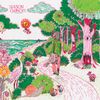
A gorgeous, refined, and perfectly unnecessary album.
Season Changes changes nothing, but it does so with such grace that it almost doesn't matter.
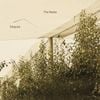

An album that pretends to have open veins, but wears latex gloves.
No Place Like Home isn't rock, it's ready-to-wear emo, designed for those who want to feel tormented without risking ruining their mascara
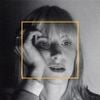
If there's a way to destroy the very meaning of alternative pop, Hayley Williams has found it: just remove its heart, sterilize it, and sell it as introspection.
Ego Death at a Bachelorette Party is a clinically dead album, kept alive by a compressor and an excess of awareness.
The soundstage is a disaster of timid production and autoptic arrangements.
The drums don't sound: they tick like corporate metronomes.
The synths, rather than creating atmosphere, simply carpet the space ... read more
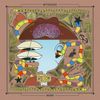
Solid, well-played, and completely inoffensive.
An album that celebrates the dust of Texas without ever getting its boots dirty.
Perfect for those who love American tradition, as long as it stays well-ironed.

Céline Frisch returns to Bach like someone returning home after a space voyage: with respect, but also with the coolness typical of someone who has already seen infinity and is no longer moved by a sunset.
Partitas are one of the riskiest territories for a harpsichordist: too much zeal and you sound like an archaeologist dusting off a masterpiece; too much heart, and you descend into baroque kitsch.
Frisch, as always, chooses the third option: absolute control.
Every phrase is lucid, ... read more

La Niña torna e decide di fare la cosa più coraggiosa che un’artista pop italiana possa fare nel 2025: non fingere di essere americana.
Furèsta è un disco in cui Napoli incontra Berlino in un parcheggio multipiano alle tre del mattino, e nessuna delle due città ne esce sobria.
È un album pieno di visioni, dialetto, voci spezzate e beat che sembrano campionati dal battito cardiaco di una divinità tossica.
La Niña canta come se avesse ... read more
There are albums that seem to be written to be loved by those who hate music. Ce Qui Tourne Dans L’Air is one of them.
The Canadian collective L’Oumigmag—already known for treating improvisation like a sacrament—releases an album that wanders rather than plays: sixty minutes of strings, wind instruments, and percussion that act as if they've never seen each other before, and probably never will again.
The title means "what turns in the air," and indeed ... read more
![鈴木彩文 [Ayami Suzuki] - Rebirth / Omen](https://cdn2.albumoftheyear.org/100x0/album/1335984-rebirth-omen_114701.jpg)
The project moves between ambient, avant-pop, and digital spirituality: crystalline vocals, icy synths, calibrated glitches, and a slow-motion, shattered dream aesthetic.
A work that aims to be a rebirth, but sounds more like the melancholic memory of something that was never truly born.
The two main themes—Rebirth and Omen—represent two opposite poles: fragile light and subtle shadow. In theory. In practice, the album glides along an almost constant emotional line: a beautiful, ... read more

Benito returns, and with a title that sounds like he wrote it after losing an Instagram bet: DeBÍ TiRAR MáS FOToS. That alone would be enough to sum up the album—an endless selfie disguised as a work of art.
Bad Bunny doesn't sing, he poses; he doesn't narrate, he reflects; and he doesn't experiment, he simply updates his existential brand image.
The album lasts too long, as always, because every track is meant to be a declaration of "I am ... read more

Every time a new Rallizes "unreleased" track comes out, it feels like someone found another reel buried under a tatami mat and decided the world needs more '70s Japanese distortion.
Jittoku '76 is no exception: the sound is muddy, the guitars are an electric deluge, Mizutani's voice is a drunken ghost preaching into a broken speaker—and yet, miraculously, it works.
The concert captures the Rallizes at their best (i.e., their worst): a wall of feedback and ... read more

Three giants of free jazz—Isaiah Collier, William Parker, and William Hooker—team up for an album that promises to evoke the spirits of Coltrane and Ayler, but ends up evoking migraines above all else.
It's a powerful record, yes, but also exhausting: four long improvisations where chaos disguises itself as revelation and energy often replaces ideas.
Parker and Hooker hold the show afloat with titanic dignity, while Collier blows as if he must convince the universe to grant him ... read more

Carmen Consoli torna con il suo nuovo lavoro, Amuri Luci, e già il titolo — con quella patina pseudo-mistica e vernacolare — promette un’esperienza “profonda”, “radicata”, “autentica”. Traduzione: un’altra operazione d’autore che flirta con la tradizione siciliana come un turista spirituale con la macchina fotografica d’epoca.
Dieci brani in dialetto, dieci inni all’“identità” filtrata ... read more
![Ciśnienie - [angry noises]](https://cdn2.albumoftheyear.org/100x0/album/1448091-angry-noises_191827.jpg)
Ah, post-rock: that genre where every guitarist dreams of being a sound architect and ends up sounding like a depressed electrician.
Polish band Ciśnienie are back with [angry noises], and the title itself sounds like an honest disclaimer: "Warning: this album contains angry noises." Finally, someone who isn't faking it. Too bad the anger, as often happens in contemporary post-rock, ends in long jams where nothing really happens, but with great conviction.
Recorded live ... read more
1
2
Create an account to rate and review albums.
Recent Review Comments
On lucacomi's review of Iosonouncane - IRA
"Non sono d'accordo. L'ho riascoltato. Molto prolisso ingiustificatamente. Sound articolato, più che complesso. Una specie di progressive di moderna e neo classica, con sfumature di ambient e fusion. Non è male, intendiamoci. Ma non è questo capolavoro, per me. Purtroppo."
Advertisement