

85
Nick Cave has remained an unparalleled craftsman throughout his forty-five-year career, exploring everything from morbidity to love and religion.
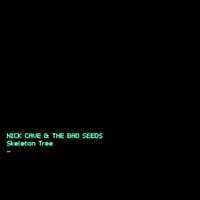
Skeleton Tree, released a year after his son's tragic death in a cliff accident in twenty-fifteen, is jittery, ascetic, and devasting.
Ascetic, a term that describes spiritual discipline, is the core of this record. Here the spiritual discipline is the melodic scarcity in both voice and instruments. Cave meditates over his son's death, and as abstract as the words are at times, the delivery is everything. It accentuates grief in a manner less of a platitude.
Repetition is used far too frequently as a cop-out. Run out of ideas? Repeat a line five times to make the track longer. Conversely, Cave approaches it with such incredible virtuosity that it serves a purpose rather than demonstrating dwindling inspiration.
Grief is rarely explored structurally and sonically in the manner it is here, and words are not the dominant conveyer. In "Magneto", his vocals are devastating; he uses the bottom range of his cords in a sobbing-like cry, almost youthful manner. This and the choruses show us a man so broken it is hard not to wince.
It is also unfair not to mention Warren Ellis, whose abrasive and airy electronic loops produce a beautiful sonic representation of sanity rocked by tragedy in the album's runtime. Ellis is as much a genius as Cave, and it frequently goes unrecognised.
"You believe in God, but you get no special dispensation for this belief now", Cave says on the opening track "Jesus Alone". God doesn't discriminate is the message here. As a believer, my faith feels challenged. How could God have Nick bury his fifteen-year-old child?
Furthermore, by tying the two cuts, "Girl in Amber" and "Magneto", together, Nick portrays himself as emotionally detached and animal-like. It is riveting to listen to. Later in "Girl in Amber", Cave says, "I used to think that when you died, you kind of wandered the world." he follows up with, "Well, I don't think that anymore". He once believed the presence of Arthur would remain after death, but as the loneliness took hold, it became harder for it to stay. Nick Cave never ceases to be forthright in his work, and it is at its best in these tracks.
However, as dark as Skeleton Tree is, an exquisite moment of redemption in "Distant Sky" is achieved with the help of soprano vocalist Else Torp. No words are adequate to describe it.
The overall bleakness of this record may be a turn-off for many, but it is a potent one in the later Nick Cave canon and a necessary listen.
RIP Arthur Cave
Comments
Sign in to comment.
Related Content
Advertisement


Rate and review albums along with the AOTY community. Create an account today.
Become a Subscriber
Subscriber badge, no ads + more benefits.
Subscriber badge, no ads + more benefits.