

96
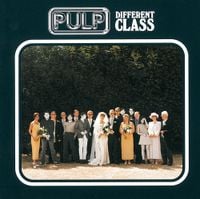
Not that often do I really leave large reviews on albums, in fact this might be my first *actual* review on this site, but holy fuck is this album probably one of the most underrated pieces of art. In a time where music in the UK was raving all about the two other biggest bands at the time, Oasis and Blur, Pulp came in with Different Class at the very height of the Britpop phenomenon and ended up with one of the best albums of its time.
First of all, the sound of this album is absolutely impeccable. The album is labelled as Britpop, which is sort of correct, but Pulp manage to cram SO many different genres in here. None of the other popular Britpop bands at the time could quite replicate this— no one could even have DREAMED to touch how unbelievably fun this whole record sounds. Ranging from the disco influences scattered across a lot of the album or whatever genre you could possibly put songs like I Spy in, this album sounds innovative, futuristic, and avoids perhaps the biggest sin in all of music— it’s not boring. In fact, it’s basically the opposite.
For a record that, on first listen, sounds like a conventional Britpop record with a couple of hits that everyone and their nan in the UK knows, it’s easy to ignore that the writing here is genuinely a work of genius. The album explores themes of poverty, the class divide in Britain… and also getting absolutely pissed in the process. Opener Mis-Shapes discusses this class divide by formatting itself as a direct criticism of the upper class— first writing from the point of view of the lower classes. This album isn’t entirely all about that, though— frontman Jarvis Cocker’s incredible talent for storytelling is unveiled in the hit single and the band’s most popular song Common People, where Cocker sings from the point of view of a lower-class man on a date with an upper-class woman— eventually concluding on the note that, as the title suggests, they’ll never live like common people. Pun intended.
Cocker continues these criticisms as the first part of the album progresses. I Spy continues Cocker’s otherworldly storytelling— this time playing a man who goes behind a rich man’s back to, quite literally, cheat with his wife. The album itself, obviously, is fairly explicit— proven with moments like this. Cocker obviously was a sex icon in 1995 when this record released, again adding to this massive, overwhelming charisma this album has.
As the album closes, Cocker takes things up a notch— the final four songs here are incredibly cinematic while also retaining the persona Cocker builds during this album, establishing himself as a voice for Britain’s working class. Bar Italia rounds this off and closes the album— which to this day, holds up as almost a time capsule of British society in the 90s, while simultaneously pioneering this new, fresh, almost futuristic sound.
Best Tracks: Bar Italia, I Spy
Worst Track: Pencil Skirt
96/100
Comments
Sign in to comment.
Related Content
Advertisement

Rate and review albums along with the AOTY community. Create an account today.
Become a Subscriber
Subscriber badge, no ads + more benefits.
Subscriber badge, no ads + more benefits.