

85
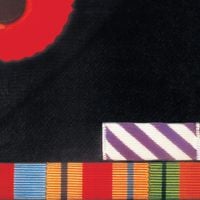
One of the most misunderstood Pink Floyd releases, "The Final Cut" is quite flawed in a few areas, yet extremely moving and beautifully tragic. Although it does not necessarily beat the Roger Waters solo album allegations, it's a record that I've nonetheless completely changed my opinion of over the years. Maybe it has to do with age, reflecting on childhood traumas, thinking more about the state of the world, and where I fit into it within the middle of my life; I've come to appreciate "The Final Cut" for being uniquely intimate and vulnerable.
This record, contrary to popular belief, is not merely cut songs and B-sides from "The Wall." Although there are certainly similarities in the motifs used throughout "The Final Cut," such as the strings of the self-titled track sounding eerily like the ones in "Comfortably Numb," this album is more like a a spiritual successor. Rather than extending the story of Pink, the protagonist of "The Wall," there's a greater focus on Waters himself. Throughout the record, he explores mass disillusionment within post-WWII, post-empire Britain, while expressing the pain of watching the promise of post-war future gradually die. Far more than previous Pink Floyd releases, this one is best experienced start-to-finish.
It is not an easy album to listen to. For starters, it's heavily political, and with basically no attempt toward subtlety. As an example, the intro track features Waters derisively wailing out "Oh Maggie, what did we do," referencing then-prime minister and Satan spawn Margaret Thatcher. Later on, in "The Fletcher Memorial Home," Waters asks that the world place all its global leaders in the memorial home of his father, an air force pilot who died during WWII, in order to gas them to death. However, though the content can be overbearingly on-the-nose at times, I think it's best to take some of it as raw expressions of Waters' personal feelings rather than as coherent political statements. Besides, throughout the record, and through writing from the perspective of other characters within it, such a dying gunner or a returning solider-turned-teacher, Waters covers multitudes of conflicting emotions. There's his own alienation from his peers, generational grief over those who died at war, fear of of a nuclear apocalypse, and the pressures to repress these feelings in polite society. Far from being a narrow-minded political rant for 12 tracks, there's a fair bit of emotional depth here that will resonate with audiences. The penultimate track, "Not Now John," a rage-filled diatribe against racism, profit-driven industrialization, and militarization, hits especially hard after the 10-song build up, as does guitarist David Gilmour's sudden vocals, in his only singing track of the record.
Speaking of which, it's difficult to disentangle "The Final Cut" from the consequences it had on Pink Floyd. In addition to coming out after the temporary departure of keyboardist Rick Wright, this was the last record Pink Floyd and Waters ever made together, in large part due to conflicts between Waters and the rest of the remaining band members during its recording process. Although Gilmour provides the album some of his most soulful and powerful solos, like in the self-titled track, "Your Possible Pasts," and "The Fletcher Memorial Home," the album, on the whole, is overwhelmingly dominated by Waters. Though I certainly sympathize with the bitterness many Floyd fans feel toward the record and even its creative lead, the actual quality stands the test of time. I think this album is a gorgeous, even if fairly bittersweet, ending for the Waters era.
Comments
Sign in to comment.
Related Content
Advertisement
Rate and review albums along with the AOTY community. Create an account today.
Become a Subscriber
Subscriber badge, no ads + more benefits.
Subscriber badge, no ads + more benefits.