
Carcharodon
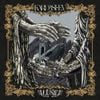

Rose-tinted spectacles duly crushed underfoot, I started to see some of Alunea’s qualities, but its key shortcoming came into focus also: it lacks structures, which guide the listener through the journey Kardashev want to take you on. They did this very effectively on Liminal Rite, but, in cutting length, they also lost clarity in the songwriting. Alunea has many strong building blocks, but they have been stacked at overly jaunty angles.
1y
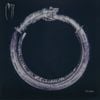
While The Spin does feel less like a single, flowing composition than previous Messa records, it doesn’t lack cohesion, and the massive, standout highs offer plenty of compensation for that slight loss in flow.
1y
![מזמור [Mizmor] - Alluvion](https://cdn2.albumoftheyear.org/100x0/album/1036666-alluvion_212155.jpg)
If you are familiar with Mizmor and Hell’s past works, and can sort of picture what a collaboration focused on psychic distress might sound like, BOOM, you’re right! Alluvion is exactly that.
1y
While closer to a traditional album in structure than Unreqvited’s previous output, A Pathway to the Moon gives the impression of a cinematic soundtrack.
1y
Whilst not quite reaching the stellar heights of series-highlight Chapter II: Render unto Eden, Chapter IV: To Shadow Zion has a devastating flow to it and it’s more than worthy of closing this epic saga.
1y
Ditch two tracks and re-order the rest to give the album a logical flow, and you’d be looking at a record that could stand toe-to-toe with pretty much anything in Sólstafir’s catalogue.
1y
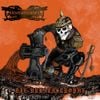
Kanonenfieber weaves into the sound, coupled with the subtle tempo and stylistic shifts, give this album an almost languid fluidity and make it a heart-wrenching joy to listen to. The skill and attention to detail that went into crafting this record are outstanding
1y
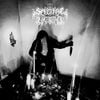
Clearly written by the same band that conjured Infernal Decadence and A Diabolic Thirst, Songs of Blood and Mire has just a few more tricks up its ragged sleeve.
1y
I found this review almost as frustrating to write as GREIF is to listen to. It’s categorically Zeal & Ardor but, for a lot of the record, that’s only because of Gagneux’ hugely emotive and distinctive voice. Change lead vocalist and I would struggle to identify a lot of this material as Zeal & Ardor.
1y
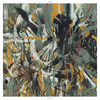
Abrasive, spiky, challenging, and curiously beautiful, The Healer’s pulsing, percussive, almost-free-form experimentation is like Isis’ Celestial on a bad acid trip.
1y

Flawed but never less than captivating, this album is absolutely worthy of being Ihsahn’s self-titled opus.
2y
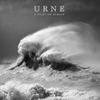
When Urne really hit their stride, like on “A Stumble of Words” and “Becoming the Ocean,” the material is stellar but the combination of the production issues and lack of a truly great vocal performance ultimately limits A Feast on Sorrow to “just” good.
2y
![מזמור [Mizmor] - Prosaic](https://cdn2.albumoftheyear.org/100x0/album/670715-prosaic_1147.jpg)
Excellent musicianship and well-crafted songs are deployed across a modest runtime (just 46 minutes) that gives you all the Mizmor you need but no more.
2y
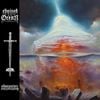
I predict it will become one of the reference points for the genre and propel Chained to the Bottom of the Ocean toward some much-deserved recognition.
3y
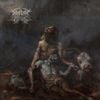
Dark, bleak, and built around a great concept, Noise has once again delivered.
3y
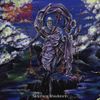
Saturnian Bloodstorm is the real deal ... and sees Lamp of Murmuur nailing it, from the broad brushstrokes to finer detailing.
3y
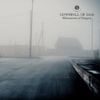
It was in trying to figure out where to place it in Downfall of Gaia’s catalog that Silhouettes of Disgust suddenly clicked for me.
3y
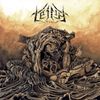
Leiþa has delivered a very strong record here. Packed with emotional heft and great songwriting, this was a very good, if rather heart-wrenching, way to start my 2023 reviews. Superior to Sisyphus in its consistency and flow, I am sure I will return to Reue’s bleak and darkened atmosphere often as the year progresses.
3y
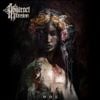
Woe is, for the most part, an album of incredible consistency and great vision, that is both well written and beautifully executed. Everything you hope for and expect from that cover art is here in spades.
3y
While I must, of course, assess the record on its own merits, it’s impossible not to also look at it in context, namely as the third, and penultimate, instalment of The Suns series. Seen through that lens, it is the weakest of the three.
3y
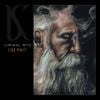
Liminal Rite is heart-wrenchingly beautiful and practically flawless from start to finish ... Kardashev brilliantly occupies both the glaringly light and hauntingly dark places, as well as the shades in between. Any and all time invested in Liminal Rite will be repaid with interest.
3y
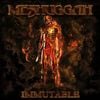
Do not expect Immutable to be some free-wheeling prog outing. The album is still a brutal, dense slab of hugely technical, abrasive metal that is unquestionably Meshuggah. And yet Immutable finds the band in a—relatively—playful mood.
3y
1
2