
“I Knew It, I Knew You” finds Swift returning to third-person narration without her usual biographical mythologizing. Instead, she filters it through a character’s perspective, nodding to “My Boy Only Breaks His Favorite Toys” as a sly self-reference. Her writing here is the sharpest and leanest it’s been in years, but with the harmonica doing most of the rustic heavy lifting and those programmed drums landing a wide, sinking stomp, anyone waiting for a full ... read more
The album feels unexpectedly accessible for a math rock record. It relies on recurring structural anchors, with riffs and sections returning often throughout. Some of its melodies drift toward Turkish modal shapes, giving the album an Eastern Mediterranean haze that sits apart from the genre’s usual clinical precision.
On her cool-headed dance record, Arlo Parks's warm, attentive portraits of nightlife turns moments of euphoria into something tender and observant.
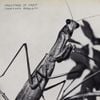
Courtney Barnett’s Creature of Habit devotes itself single-mindedly to the engine of writing and living. Its deliberately narrow melodic and production palette accrues a clumsy, rough-hewn charm that makes the album feel like a dispatch from a different age.

Avalon Emerson's songwriting captures a distinctly adult vision of love, leaning on macro imagery to illuminate the transience of joy and human connection, yet still insisting that this fleeting life is more than worth living. A DJ by trade, she delivers remarkably sturdy pop writing, where the sonic palette pulls from different decades but coheres into a seamless whole, and the arrangements feel airy and light-footed, bristling with life through a keen, crisp rhythmic control.
U features songwriting and production that feel firmly anchored and immediately relatable.

Sturgill Simpson’s second JBS album puts rock first and writes plain about sex and politics. Its lofi, jamming mix pulls more from 1980 than it loses in fidelity.
![周杰倫 [Jay Chou] - 太陽之子 [Children Of The Sun]](https://cdn2.albumoftheyear.org/100x0/album/1733687--children-of-the-sun_163432.jpg)
The C‑Pop superstar’s latest is noticeably better than his previous record. Most of the melodies are solid, and it’s clear there was more external quality control this time. The overly self‑indulgent lyrical moments have been pared back somewhat, though the lines dripping with cringe are still instantly recognizable as his own. Chou seems to be balancing his past style with one eye on current trends, and the increased use of rapid hi‑hat patterns and modern rhythmic touches ... read more

The songwriting is boldly freewheeling, with topics ranging from hunting to Indian cities that vividly illustrate Childers’ highly stylized vision on this record. Building on his Appalachian storytelling roots, the album weaves in elements of rock, spiritual inquiry, and eclectic musical textures, making each track distinct yet complementary to the whole.

The Afterglow carries a kind of after-party clarity, moving in a more delicate, seamless flow than the parent record, as if the intensity has settled into a softer, lingering haze.

Rather than a retreat from the more melodic direction of the previous record, Lonely People With Power feels like a consolidation of what came before. Pop-leaning song structures and rock instrumentation lend their catharsis a different texture.
As Jenn Wasner loosens her grip on the outside world and turns inward with more care, the music softens with her. The opening pair recalls Weather Alive: plainspoken phrasing set against wide, circling soundscapes. The following run of guitar-led and rhythm-driven folktronica pieces carries a faint electronic layer beneath the acoustic surface, before the back half settles into a clearer folk/Americana mode. It feels best suited to an early autumn morning, just before the day begins to fill ... read more
With an open, luminous, and almost sacred quality, the music weaves saxophones throughout a blend of jazzy krautrock and cosmic synthesizers, their solos flowing as smoothly as a vintage space radio transmission. It traces a path through personal feeling, anxiety, and release. Each song progresses in distinct layers, gradually gathering tension until it breaks open, allowing every emotional atmosphere the room to fully develop. The extended length feels immersive and transportive.

It feels like a throwback to the unmanaged, unbranded celebrity culture of the 2000s. It gives you the strange, disorienting feeling of watching tabloid dramas play out, but from a different time. This overarching narrative even makes some tracks struggle to stand alone outside the album's context. Musically, it feels autonomous from contemporary trends, but it does result in a coherent and assured sound.
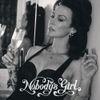
Nobody’s Girl offers a painfully intimate window into a marriage's aftermath. It makes you wonder if any union truly has a single, objective history, or just countless personal versions that eventually fracture. The album's spacious, somber soundscape cradles Shires' defiant yet weary delivery. It's a stark, resonant portrait of choosing self-preservation over a shared narrative, leaving you to sit with the complicated, lonely truth of that choice.

On Heart Go Wild, Spence's delicate, vulnerable songwriting is perfectly complemented by her unguarded vocal delivery, set against a backdrop of immaculate, balanced production. The album closes on a high note with a War on Drugs-inspired finale, where layers of expansive piano and guitars build into a halo-like soundscape. It feels vast and intimately liberating.
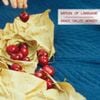
Analog synthesizers, cool electronic rhythms, and a gentle yet expressive voice evoke a kind of urban romanticism that feels dreamlike and distant.

Blurrr achieves self-reconciliation through its blurred aesthetic. Joanne Robertson forges lyrics into instinctual whispers, letting feeling override language. The album emerges like a lucid dream from the mist, ultimately arriving at the quiet resolution of Last Hay's "lay out where you lay." It's not an ending, but a silent understanding with all that remains unfinished.
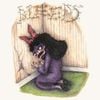
Bleeds continues Wednesday's signature dynamic of shifting between aggressive and tranquil passages, with a notable intensification of noise elements. However, the imbalance between instrumental and vocal loudness occasionally creates a murky texture, compromising melodic clarity. That's a sonic departure from Rat Saw God, where successive hooks ingeniously offset vocal limitations. Here, the sparse arrangements of minimalist piano and slide guitar phrases feel comparatively ... read more
Create an account to rate and review albums.
Recent Review Comments
On Wednesday - Bleeds
"@Mellope I just wish the melody could be stronger"
On JADE - THAT'S SHOWBIZ BABY!
"@Mellope thanks!"
On Maroon 5 - Love Is Like
"@Mellope I could tolerate a couple of songs"
On Ninajirachi - I Love My Computer
"@Mellope Yeah been on the road for a bit but I’ll be catching up!"
On Justin Bieber - SWAG
"@Mellope thanks as always ; ))"
On Justin Bieber - SWAG
"@Mellope yes!"
On Loyle Carner - hopefully !
"@Mellope Had to give this the deep dive it deserves. Hope you enjoyed it too!"
On Stereolab - Instant Holograms On Metal Film
"@Mellope favorite is the 7th track"
On Gracie Abrams - The Secret of Us
"@Mellope this is simply unbearable"
On billy woods - GOLLIWOG
"@Mellope this one is more in the 'abstract' vein and doesn't do as much as his last for me musically, but if you like this genre you'll like it"
On billy woods - GOLLIWOG
"@rivejso 68 and Fantano's 7 are literally neighbor scores, but keep crying 'd riding' while you're deepthroating that 100. x"
On Morgan Wallen - I'm The Problem
"@Mellope I think he's decent musically most of the time for what he does"
On Kali Uchis - Sincerely,
"@Mellope not liking the direction she's taking"
On Michael Kiwanuka - Kiwanuka
"@Mellope you very likely will, amazing stuff"
On Viagra Boys - viagr aboys
"@Mellope right, especially considering his hip hop-leaning audience"
On Viagra Boys - viagr aboys
"@Mellope If the singles didn't grab you, you're probably making the right call, they're definitely the standouts. I don't mind the deeper cuts, but they mostly just blend into the album's messy vibe without adding much"
On Lorde - What Was That
"@Mellope it's indeed not as immediate as Melodrama"
On Lorde - What Was That
"@Mellope Ha, trying to catch up"
On Selena Gomez - I Said I Love You First
"@Mellope not much joy indeed for an album like this"
On clipping. - Dead Channel Sky
"@Mellope it's lesser than the sum of its parts"
On Magdalena Bay - Imaginal Disk
"@Mellope for sure"
On Lady Gaga - MAYHEM
"@Mellope True, she’s dabbled in rock before (Joanne and those BTW cuts) and old-school balladry (Shallow). But Die With A Smile just feels thrown in for the charts, not the ‘mayhem’ vibe. And those disco-funk tracks are tightly executed, perhaps fairly new to her, but really not that groundbreaking in 2025. Still, a polished package (63 is actually a pretty decent rating for me), just wish it went a bit harder"
On Lady Gaga - MAYHEM
"@Mellope Totally get why you’d rate it higher. Production’s undeniably tight, but the tracklist feels like she’s playing too safe after years of reinvention imo. Still a fun ride, just wish she’d fully commit to the mayhem haha"
On Taylor Swift - THE TORTURED POETS DEPARTMENT
"@Mellope the production choices and tracklist length are valid criticisms. But for me, the writing outweighs those flaws, the lyrics feel sharp and intentional"
Advertisement