


Blondshell’s If You Asked For a Picture channels the ’90s alt-rock tradition of emotional excavation through a distinctly feminine lens. Where her debut weaponized trauma into spectacle, here she maps the quiet erosion of daily life—motherhood’s invisible inheritance ("23’s a Baby"), the warped intimacy of gendered power plays ("T&A"). In an era drowning in infinite playlists and disposable swipes, Teitelbaum obsessively circles the void: ... read more

Coasting on recycled rock riffs and melodies so generic they feel focus-grouped for dad-rock playlists.
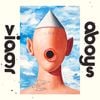
Viagra Boys stand out in the new wave of post-punk with their sharp melodic craftsmanship and airtight musicianship. They masterfully navigate intricate rhythms while keeping things danceable, weaving in fresh additions like flutes and a piano ballad that closes the album with disarming tenderness. Moving beyond the overt political satire of Cave World, this record tackles universal themes—skewering commodified bodies, obsessive wellness cults, and the fractured identities of social ... read more
The album weaves Beirut’s early chamber-folk elegance with synth-driven textures nodding to 2000s indietronica’s insular remoteness (reminiscent of Nation of Language but less urban-groove-driven), deepening its haunting meditation on loss and impermanence.

Following the stripped-down SABLE EP, the double-album's blend of country-tinged R&B and soft-pop textures aligns with 2025's mainstream sonic zeitgeist. Vernon sheds his cryptic lyricism and self-crafted mystique, radiating an inviting, sunlit agreeableness. It's just a simple man and simple music—proving that earnest clarity can resonate as powerfully as enigmatic artistry.

The album's most compelling moments still lie in its darker production touches. Compared to Turnpike's previous record, these moments are now placed deeper into the tracklist, resulting in slower emotional momentum. A more varied sequencing would have allowed the emotional peaks to land with greater force.

What Was That acknowledges relationships as smoke and mirrors, yet honors their formative weight. Here, Melodrama's adolescent urgency matures into a clearer synth palette, trading chaotic spark for introspective precision.
With a more improvised approach, Bejar’s latest retains his self-mythologizing lexicon and self-referential nods, the self-contained microcosm consistent across his work remaining its core allure.
Whether it’s the off-kilter alternative country-folk of the album’s first half or the sparse yet substantial ambiance of its latter portion, there persists a melancholic yet tender human touch, a tone that feels caring and contemplative in its examination of emotion.

With Forever Is A Feeling, Dacus's music has shifted into an unaffecting, consistently soft, folk-inflected sound, missing the raw edge of her earlier work. Her keen, detail-rich depictions of the obsession, passion, and possessiveness of a new relationship remain compelling, though here they occasionally come off as overly mundane and border on fan service. Both the lyrics and production could benefit from higher intensity.
The new version of Eternal Sunshine sees Grande finding closure for her much-scrutinized love story, with less restrained softness and more expansive sonic dynamics.

The percussion pivots toward a dance-punk, almost free jazz-like framework with manic energy, yet the album’s singular obsession with a single distorted synth motif (relentlessly recycled) sabotages any momentum. Basslines lack grit, guitars vanish entirely (understandable for a no-wave act), leaving drums to overcompensate for the mix’s low-end absence. As a debut LP, it exhausts its bag of tricks within 10 minutes, a fatal flaw for a band touted as avant-rock innovators.
Tepid narrative arc aside, the album's musical core delivers stronger melodies than her recent one-off singles with surface-level nods to contemporary pop sensibilities.
Even background/functional music requires some appropriate groove or hooks as anchors. Their last three albums have been on a gradual decline in this aspect, with the latter tracks drifting into lounge/easy-listening territory, which further intensifies this issue.

Compared to their previous two horror film-inspired albums, Dead Channel Sky adopts a more loosely defined futuristic dystopian concept with less cohesive execution. Yet paradoxically, their rapid-fire techno-rap passages, technically dazzling yet refreshingly uncontrived, ultimately land with sharper impact here.

Opening keyboard tones show promise with their sleek modernity, but the rigid drum programming turns lyrical phrasing robotic. Their over-compressed high-range vocals lack emotional texture—even as an album interlude, this portrayal of relational stagnation feels undercooked.

Mayhem revives Gaga's signature shock-pop formula with a genre-blending mix of industrial rock grit, disco grooves, and Prince-inspired funk, leaning closer to her early The Fame era than 2020’s house-oriented Chromatica. While the album’s first half thrives on chaotic dancefloor energy, its tonal shift toward adult-contemporary ballads (notably the Bruno Mars duet "Die With A Smile") reveals a veteran’s playbook: She knows when to double down on musical chaos ... read more

Rarely Do I Dream stitches childhood’s golden haze with ominous undercurrents—preachers’ sins, pill-stashed Jesus—through warped tapes and glitched synths. By pausing the reel before tragedy strikes, Powers lets past haunt as something he can control, and that's a brave act.
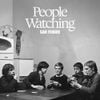
Sam Fender’s third album People Watching builds on his heartland rock roots while weaving in folk and psychedelic textures (co-produced by The War on Drugs’ Adam Granduciel). Themes of working-class struggle—from privatized railroads in "Crumbling Empire" to "Chin Up"’s haunting image amid energy crises and NHS underfunding—collide with post-fame alienation ("TV Dinner"’s self-mocking “grass-fed cash cow” critique). ... read more
Create an account to rate and review albums.
Recent Review Comments
On Wednesday - Bleeds
"@Mellope I just wish the melody could be stronger"
On JADE - THAT'S SHOWBIZ BABY!
"@Mellope thanks!"
On Maroon 5 - Love Is Like
"@Mellope I could tolerate a couple of songs"
On Ninajirachi - I Love My Computer
"@Mellope Yeah been on the road for a bit but I’ll be catching up!"
On Justin Bieber - SWAG
"@Mellope thanks as always ; ))"
On Justin Bieber - SWAG
"@Mellope yes!"
On Loyle Carner - hopefully !
"@Mellope Had to give this the deep dive it deserves. Hope you enjoyed it too!"
On Stereolab - Instant Holograms On Metal Film
"@Mellope favorite is the 7th track"
On Gracie Abrams - The Secret of Us
"@Mellope this is simply unbearable"
On billy woods - GOLLIWOG
"@Mellope this one is more in the 'abstract' vein and doesn't do as much as his last for me musically, but if you like this genre you'll like it"
On billy woods - GOLLIWOG
"@rivejso 68 and Fantano's 7 are literally neighbor scores, but keep crying 'd riding' while you're deepthroating that 100. x"
On Morgan Wallen - I'm The Problem
"@Mellope I think he's decent musically most of the time for what he does"
On Kali Uchis - Sincerely,
"@Mellope not liking the direction she's taking"
On Michael Kiwanuka - Kiwanuka
"@Mellope you very likely will, amazing stuff"
On Viagra Boys - viagr aboys
"@Mellope right, especially considering his hip hop-leaning audience"
On Viagra Boys - viagr aboys
"@Mellope If the singles didn't grab you, you're probably making the right call, they're definitely the standouts. I don't mind the deeper cuts, but they mostly just blend into the album's messy vibe without adding much"
On Lorde - What Was That
"@Mellope it's indeed not as immediate as Melodrama"
On Lorde - What Was That
"@Mellope Ha, trying to catch up"
On Selena Gomez - I Said I Love You First
"@Mellope not much joy indeed for an album like this"
On clipping. - Dead Channel Sky
"@Mellope it's lesser than the sum of its parts"
On Magdalena Bay - Imaginal Disk
"@Mellope for sure"
On Lady Gaga - MAYHEM
"@Mellope True, she’s dabbled in rock before (Joanne and those BTW cuts) and old-school balladry (Shallow). But Die With A Smile just feels thrown in for the charts, not the ‘mayhem’ vibe. And those disco-funk tracks are tightly executed, perhaps fairly new to her, but really not that groundbreaking in 2025. Still, a polished package (63 is actually a pretty decent rating for me), just wish it went a bit harder"
On Lady Gaga - MAYHEM
"@Mellope Totally get why you’d rate it higher. Production’s undeniably tight, but the tracklist feels like she’s playing too safe after years of reinvention imo. Still a fun ride, just wish she’d fully commit to the mayhem haha"
On Taylor Swift - THE TORTURED POETS DEPARTMENT
"@Mellope the production choices and tracklist length are valid criticisms. But for me, the writing outweighs those flaws, the lyrics feel sharp and intentional"
Advertisement