

Hollow, deep, and steeped in cold stillness, the delicate plucking of acoustic instruments winds its way into the night, carrying with it a sense of quiet mystery.

Rogers’ fusion of ’90s country, folk, and rock has been fascinating. Here, she sounds even more assured, navigating the emotional highs and lows of adulthood with insights that feel fitting for her age.
The production overall feels lighter, with the tracks leading up to ‘3AM’ featuring tightly crafted flows and rhyme schemes that bring a sharper edge compared to the melodic passages. Her straightforward songwriting balances moments of sincerity with an in-your-face energy.

Not that major in blackgaze elements—it works really well as a regular shoegaze listen.

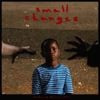
Small Changes feels more restrained, moving away from the thunderous, intricate arrangements and harmonies of Kiwanuka's last album. The focus shifts to subtle, individual transformations, yet it still continues to offer a comforting sense of calm.

The soothing strings and folk elements paint a picture of the hopeful possibilities in the post-war times.

On Where The Butterflies Go in the Rain, Raveena sounds richly expressive. The addition of sophisti-pop and hip-hop beats allow for a consistently blooming delivery.

Funeral for Justice follows the successful formula of Mdou Moctar's last, though the transitions, except for those involving electric guitar, could benefit from a more balanced arrangement.

The sound reminds one of the early 2010s, when music often blurred the lines between pop and rock, mainstream and indie. Mk.gee brings a contemporary, eclectic DIY ethos shaped by the influences of R&B and soul icons, his instrumentation exuding a warm, smooth, nocturnal quality. The tracks seamlessly blends into one another, which create one of this year’s most distinctive and dreamlike soundscapes.
A culmination of his past styles, blending his early rock sound with the cinematic elements of Pure Comedy and the string arrangements from later works (which I find less appealing). The further it departs from the easy-listening, lounge-like vibes of Chloë, the better—highlighted by tracks like Screamland, a more experimental industrial piece that marks a small step forward. It’s evident that he has dialed back much of the outward-facing, provocative observational sharpness of ... read more

Shawn Mendes’ fifth studio album, Shawn—his second self-titled release—feels like the most clichéd “back to basics” collection imaginable: sparse, low-budget guitar picking, magnified first-world problems, and a cover thrown in at the end that falls into the realm of entirely unnecessary covers which add little to the album’s appeal. Yet, compared to his earlier love for dramatics, this album shows noticeable improvement in instrumentation and ... read more

This surprise release feels like the garbage time of a game—a victory lap that drags him further from the moral high ground. The album is packed with tracks echoing the club energy of Not Like Us, but the overuse of gaudy synth melodies quickly becomes tiresome. Still, like other industry heavyweights, commodifying emotional catharsis seems like an inevitable trade-off.
Robert Smith’s voice carries a timeless, unhurried gravitas, delivering a sorrow that is both majestic and dignified, as though the full essence of the ‘80s has been carefully preserved and transported into the present—a process similar to how their successor, Slowdive, in their 2017 return, distilled their past into something more refined. The Cure’s reflections on aging and death, once prematurely mature in the youthful throes of the band’s prime, now unfold with ... read more
After several albums venturing into a fusion of New R&B from the 2010s, Tyler has made a well-timed return, in part, to his earlier style, incorporating elements of Southern hip-hop. The energetic, raw beats balance beautifully with smooth soul influences, with touches of African folk music and psychedelic rock woven in—a fitting soundscape for an album titled CHROMAKOPIA. Some tracks still blur the line between reality and illusion as he seems resolved to “take off the ... read more

For Halsey’s The Great Impersonator, the success of the impersonating is mixed—Panic Attack nails a Rumours-esque bassline, and 1983 captures a tasteful Springsteen-like synth vibe, but some of the Joni Mitchell and Cranberries tributes feel a bit directionless. Overall, the detour from folk-inspired strumming is stronger, while Halsey’s unconventional, non-powerhouse vocals, a legacy from their Tumblr era, keep things engaging. Ultimately, this feels like yet another album ... read more

A constant stream of dopamine tinged with the eccentric and gaudy flair of Eurodance.
The collision between the satirical nature of the innuendos running throughout and his ever-present tension creates a rather disorienting effect—quite literally.
Create an account to rate and review albums.
Recent Review Comments
On Wednesday - Bleeds
"@Mellope I just wish the melody could be stronger"
On JADE - THAT'S SHOWBIZ BABY!
"@Mellope thanks!"
On Maroon 5 - Love Is Like
"@Mellope I could tolerate a couple of songs"
On Ninajirachi - I Love My Computer
"@Mellope Yeah been on the road for a bit but I’ll be catching up!"
On Justin Bieber - SWAG
"@Mellope thanks as always ; ))"
On Justin Bieber - SWAG
"@Mellope yes!"
On Loyle Carner - hopefully !
"@Mellope Had to give this the deep dive it deserves. Hope you enjoyed it too!"
On Stereolab - Instant Holograms On Metal Film
"@Mellope favorite is the 7th track"
On Gracie Abrams - The Secret of Us
"@Mellope this is simply unbearable"
On billy woods - GOLLIWOG
"@Mellope this one is more in the 'abstract' vein and doesn't do as much as his last for me musically, but if you like this genre you'll like it"
On billy woods - GOLLIWOG
"@rivejso 68 and Fantano's 7 are literally neighbor scores, but keep crying 'd riding' while you're deepthroating that 100. x"
On Morgan Wallen - I'm The Problem
"@Mellope I think he's decent musically most of the time for what he does"
On Kali Uchis - Sincerely,
"@Mellope not liking the direction she's taking"
On Michael Kiwanuka - Kiwanuka
"@Mellope you very likely will, amazing stuff"
On Viagra Boys - viagr aboys
"@Mellope right, especially considering his hip hop-leaning audience"
On Viagra Boys - viagr aboys
"@Mellope If the singles didn't grab you, you're probably making the right call, they're definitely the standouts. I don't mind the deeper cuts, but they mostly just blend into the album's messy vibe without adding much"
On Lorde - What Was That
"@Mellope it's indeed not as immediate as Melodrama"
On Lorde - What Was That
"@Mellope Ha, trying to catch up"
On Selena Gomez - I Said I Love You First
"@Mellope not much joy indeed for an album like this"
On clipping. - Dead Channel Sky
"@Mellope it's lesser than the sum of its parts"
On Magdalena Bay - Imaginal Disk
"@Mellope for sure"
On Lady Gaga - MAYHEM
"@Mellope True, she’s dabbled in rock before (Joanne and those BTW cuts) and old-school balladry (Shallow). But Die With A Smile just feels thrown in for the charts, not the ‘mayhem’ vibe. And those disco-funk tracks are tightly executed, perhaps fairly new to her, but really not that groundbreaking in 2025. Still, a polished package (63 is actually a pretty decent rating for me), just wish it went a bit harder"
On Lady Gaga - MAYHEM
"@Mellope Totally get why you’d rate it higher. Production’s undeniably tight, but the tracklist feels like she’s playing too safe after years of reinvention imo. Still a fun ride, just wish she’d fully commit to the mayhem haha"
On Taylor Swift - THE TORTURED POETS DEPARTMENT
"@Mellope the production choices and tracklist length are valid criticisms. But for me, the writing outweighs those flaws, the lyrics feel sharp and intentional"
Advertisement