

98
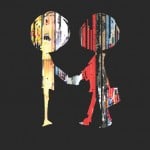
By far the best record I've ever heard. This album is closer to my heart than any other piece of art or entertainment.
I truly believe that this may be the closest an album will ever get to being the perfect 100.
Thom, Johnny and co. are the best the music industry has to offer in terms of mind. Creating an aesthetic that not only works, but is also well (re)presented all over the album. Not a single thing feels out of place. It all clicks so well.
An image so vivid, I can see the story better than real life.
This album predicted the future unlike any other.
The social disconnect and the dependency on technology.
OK Computer speaks of a society growing more dystopian, this dystopia is now a reality. The loss of individuality is ever-growing, and the newborn are quickly downgraded to everyday android.
OK Computer portrays the image of a man struggling with alienation, paranoia, depression and (non-)conformism.
The album conveys ideals of how life is more about existing than living, always haunted by the pressures of trying to keep up.
One negative: 'No Surprises' hasn't got as much replay value for me personally, so I play it sparingly.
One insane high positive: 'Exit Music (For a Film)' is such a well-crafted track in everything it offers. It has me in tears EVERY TIME. No other song can do that to me.
Special mention to 'Electioneering' for spicing up the rock element to let us all know that an interlude of sorts like 'Fitter Happier' doesn't mean that the end is anywhere near.
I now present to you, an explanation of the first two tracks on the album. I wrote this a while back, hope it still holds up. It should give an understanding of the theme just fine.
Airbag:
Verse 1 is as complicated as ‘Airbag’ dares to get, and it’s still rather simple.
“In a jackknifed juggernaut”
In other words, a truck smashed to bits.
The chorus states:
“In an interstellar burst
I am back to save the universe”
Case in point, he’s survived technology and now it’s up to him to warn society of it’s dependance on that same technology: It’ll save you, improve your life, yes, but it’s a ticking time bomb nearing its last ticks. Someday, somehow, you’re going to be in that car crash, and you won’t survive it like I did.
When you’re dying, you’re leaving your body, you’re leaving the third dimension. Hence, the interstellar burst that is mentioned, and a burst is, of course, also related to a car crash.
Verse 2 is surprisingly clever in that you need no dictionary to decipher it. It’s simplicity (a theme throughout Airbag’s near 5-minute run time) works really well, almost to perfection.
“In a deep, deep sleep
Of the innocent
I am born again”
Here, the protagonist almost ignorantly calls everyone ‘the innocent’. Again, they’ve not been through what he’s been through, and others don’t realise that he is now a changed man, a new person entirely. He sees all the flaws in society and the people’s dependance on technology, in this case that technology being cars.
To go a little deeper though. One of OK Computer’s biggest themes is dehumanisation caused by technological advances, and here in Airbag, is when the protagonist has this moment of realisation. This car crash has made him see everything differently, and now he feels like he is the last human alive, the only person that technology doesn’t have a mental or physical grip on. ‘The innocent’ aren’t just people who haven’t seen the light, they’re innocent in a sense of unknowing. They aren’t human like they think they are. They see themselves as mankind, but to the protagonist they are more and more becoming copies of each other, the same model of… android.
It truly scares him that even the androids, the through-and-through subjects of societal standards are slowly being killed off by technology, the very thing being advertised as humanity’s greatest advancement, a saviour to the human kind.
Paranoid Android:
The protagonist in 'Paranoid Android' is lonely, sceptical and resentful of all things to be found around him. This goes far beyond just paranoia, it’s pure madness, insanity straight from the soul.
“Please, could you stop the noise
I’m trying to get some rest.
From all the unborn chicken voices
In my head”
Those lines are a great intro. They drop listeners straight into the theme. The protagonist is so in his head, that he’s hearing voices.
It goes on with...
“what’s that?
(I may be paranoid, but I’m not an android)”
That can either mean that he can’t always hear the voices clearly, making them all the more annoying or it’s his paranoia acting up. It’s not hard to imagine him nervously looking around.
The words between brackets are pretty self-explanatory. He may be paranoid, insane even, but he’s not the same generic android as everyone else, he’s no copy of those around him.
This is also where we get our first reference to the Hitchhiker’s Guide to the Galaxy. In the movie, there’s a depressed robot called Marvin, who’s also known as the paranoid android. Marvin describes himself, and I quote, as:
“A brain the size of a planet”
Marvin’s often asked to perform menial tasks for the crew of the ship.
Now, the protagonist in Paranoid Android, just like Marvin, believes he’s far too clever for his own good, and just like Marvin, the protagonist here despises certain authorities and his own creators, for he is far too powerful of a mind to simply co-exist next to all the others.
Marvin doesn’t just hate anyone though, it’s his creators he despises the most...
“When I am king, you will be first against the wall
With your opinion, which is of no consequence at all.”
This ruthless line is also a reference to Hitchhiker’s. Marvin’s creators ‘Sirius Cybernetics Corp’ are described by the Encyclopedia Galactica as “a bunch of mindless jerks who will be first against the wall when the revolution comes”. Marvin is in a constant state of boredom and depression, and he hates his creators for it.
Our protagonist in the song feels alienated from all other beings. Throughout 'Paranoid Android' you can tell he’s more and more starting to believe that he is some kind of a saviour for society. He feels, he is the only one seeing what he is seeing, because he has such an outsider’s point of view.
One day he is going to rule over all the other people, the ‘androids’, because his opinion is the only one that matters, the only one “of consequence”.
In the third verse, the protagonist is no longer oblivious in any way, he’s getting angry at the world around him. This is done perfectly, as the instruments elevate around his voice, his voice almost forcing out words, hissing the lyrics between his teeth;
The first two lines there are targeted at those who walk over others for personal gain, and those who throw a fit when they don’t get their way, with “Gucci little piggy” used as a metaphor for being spoiled. Two lines to overshadow everyone who coheres into the materialistic and consumerist ways of capitalism.
Finally, those who hold a facade of friendliness, kindness and manners are earmarked as well, hereby the line: “Why don’t you remember my name?”.
The protagonist truly shows he’s grown to despise those people in his surroundings, and it shows as the instruments rage on much harder than before and the words are almost shouted by the singer. He strongly commands “Off with his head, man” in a way, foreshadowing how he’ll act when he gets the power he believes he deserves.
After all that, the chaos continues, as a single guitar, perhaps representing the lone protagonist, screeches in a high pitch, putting up a fight against the rest of the instruments still providing their deep-sounding violence. The protagonist has had enough and this instrumental section is the sound of him putting up a fight against society in a moment of pure rage, he puts up a fight against all those ambitious fuckers and Gucci little piggies.
When the fight settles down (represented by the music calming down), the protagonist faces a moment of painful reflection;
He overestimated himself and now, while he’s being told to leave the bar (“that’s it, sir, you’re leaving”), he realises he’s lost the fight against society and it’s all coming down on him, he’s letting it all come down on him. The sounds of his surroundings and knowing that society hasn’t changed. He’s drunk, left alone to his thoughts once more, he’s panicking about the consequences of what he’s done, not realising that it’s probably very minor because he’s so caught up in his own mind.
Vomiting from all the alcohol, the protagonist has reached his low point and he’s more insane now then ever. Chanting the words like a mantra while the other phrases speak of everything that’s coming down on him, that’s happening around him and to him.
Although, this story ends in a cliffhanger, you might say that the protagonist still has a moment of brightness, a moment of necessary regret, because the “God loves his children” lines are once again the commentary we know from the protagonist, the commentary he gave when we met him earlier on. It’s pure sarcasm, saying that no God could love a miserable people like the humans. He realises that by getting drunk and engaging in that fight, he brought himself down to the level of those around him. This lingers with me every time I listen to the song, because I always think about how no one in that bar realised that he was fighting against the whole of society. To everyone else, he’s just a drunk man putting up a fight, who in the end, get’s kicked out by security for starting that fight. He’s a nobody, stuck in his own head, trapped with endless thoughts about the whole world and everything beyond it.
At the very end of the song, after there are no more lyrics left, the instrumentals kick up one last time as the fighting and the violence in the world continue, and we’ll never know if our beloved protagonist has reached such a low point ever again.
Comments
Sign in to comment.
Related Content
Advertisement

Rate and review albums along with the AOTY community. Create an account today.
Become a Subscriber
Subscriber badge, no ads + more benefits.
Subscriber badge, no ads + more benefits.