

In a different vein, this album is very good overall, with an atmospheric and almost melancholic feel. Some tracks don't quite stand out as much as the rest of their other albums, and it's best enjoyed as a whole.
One excellent track isn't enough to make an excellent EP. Aside from Dayvan Cowboy, Trans Canada Highway is a rather mid project that feels like listening to tracks that didn't quite reach the quality level necessary for being in The Campfire Headphase.
I found it rather boring, unfortunately. It's a shame because the tracks might have worked better in another context (and we see that with Smokes Quantity), but I think the project lacks an overall direction and can be a bit too repetitive.
I confess I'm a little disappointed with this EP considering the positive reviews and overall positive atmosphere surrounding it. BoC seems to be taking a more ambient musical direction with this project, and I admit I don't find exactly what I love in their music; it's not bad, but it doesn't resonate with me.

Quite enjoyable, though it didn't exactly blow me away. The tracks are fairly standard ambient techno with some interesting ideas here and there. In my opinion, the best tracks are Turquoise Hexagon Sun and Everything You Do Is a Balloon.
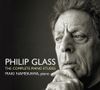
(I listened to the version played by Vanessa Wagner, not Maki Namekawa's, but since it wasn't available on the website, I used this one instead.)
Glass's études have this ability, through the simple use of a solo piano, to offer music that, when played by expert hands, is simultaneously emotional, technically impressive, and intellectually stimulating. I highly recommend them to anyone interested in Glass music.
![久石譲 [Joe Hisaishi] - 千と千尋の神隠し [Spirited Away Soundtrack]](https://cdn2.albumoftheyear.org/100x0/album/68039-spirited-away.jpg)
While slightly less consistent than some of the soundtracks (like those of Princess Mononoke or My Neighbor Totoro), it's still very good. However, I think the album's rating is a bit too high, probably due to its emotional connection to the film, which many consider the best Ghibli film (which I don't quite understand, but then again, Porco Rosso, for example, is very underrated).
![久石譲 [Joe Hisaishi] - もののけ姫 [Princess Mononoke Soundtrack]](https://cdn2.albumoftheyear.org/100x0/album/68048-princess-mononoke.jpg)
The best compositions Hisaishi has ever produced for Hayao Miyazaki's best film. Beyond the magnificent themes explored in the film, the accompanying music perfectly balances power, emotion, and epic grandeur. Simply breathtaking from beginning to end.
![久石譲 [Joe Hisaishi] - となりのトトロ [My Neighbor Totoro Soundtrack]](https://cdn2.albumoftheyear.org/100x0/album/68049-my-neighbor-totoro.jpg)
The nostalgia that the soundtrack of My Neighbor Totoro evokes for me is hard to describe. The joy that Hisaishi offers us through this soundtrack is absolutely extraordinary for a film that perfectly captures this cheerful mood without being superficial or meaningless. This music, although designed to be relatively childlike, is interesting, not lacking in complexity, while still retaining its magic and dreaminess.
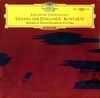
With this masterpiece, Karlheinz offers what I consider the greatest project of his career, blending vocal textures in an extraordinary way, building a very important bridge between classical and electronic music in the footsteps of Pierre Scheaffer and Pierre Henry, and creating one of the most important genres of modern classical music: electroacoustic music.
![久石譲 [Joe Hisaishi] - 紅の豚 [Porco Rosso Soundtrack]](https://cdn2.albumoftheyear.org/100x0/album/101295-porco-rosso-original-soundtrack.jpg)
It's better to be a pig than a fascist.
The soundtrack is quite different from what Hisaishi usually offers, for a film that is also quite different from Miyazaki's other films. It's rather poetic, nostalgic, and retains the film's atmosphere through its sound.
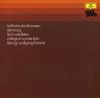
This is the kind of review where I'm not quite sure how to begin. Stimmung, by its very nature as an avant-garde and highly experimental project, might seem inaccessible, boring, or uninteresting. Yet, without being able to fully express everything I felt during my intellectual exploration of the album, I'm convinced that Stockhausen offers us a rather sophisticated album that lays very interesting foundations in the harmonic explorations of modern classical music. I think this ... read more

I had high hopes for this project, to be honest. But in the end, I'm quite disappointed, because the B-sides weren't really that interesting. Some tracks really stand out within the project (Spiral Staircase, Nightmail, Korg Funk 5), but even though all the tracks are technically good, it drags on.
The cover art is extraordinarily funny, though.

A very enjoyable EP indeed, and probably his best project under the alias Aphex Twin since his "comeback" in 2014. The opening tracks are really, really good (especially the title tracks), but the project loses a bit of quality in the bonus tracks I listened to, nine tracks in total. Anyway, very good.
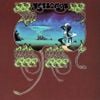
Yes has always been known for being an impressive live band, and it's no coincidence that this live album is their benchmark. The performance is breathtaking, showcasing all the grandeur of symphonic prog rock, even if, in my opinion, it's not the greatest live prog album overall. A well-deserved classic.
Brilliant, truly. I love this controlled chaos; it's always so impressive. Plus, I noticed that at 3:37 there's a sample of "Symphonie pour Homme Seul - Prosopopée 1" by Pierre Henry and Pierre Scheaffer at 0:07. Needless to say, I was very pleased to have spotted that. Anyway, hats off to you, Richard, for this project.

Richard doing acid house wasn't exactly what I was expecting, especially when I saw the cover, but oh well, it was enjoyable.
![Aphex Twin - Tha2 [world scam mix]](https://cdn2.albumoftheyear.org/100x0/album/477770-tha2-world-scam-mix.jpg)
I really enjoyed it; the music is beautiful and relaxing, just like the album cover. I appreciate how Richard is so capable of alternating between chaos and calm in his different tracks.


I need more of this kind of chaos from Richard. It's brilliant, experimental, fascinating. It's mind-blowing.
Create an account to rate and review albums.
Recent Review Comments
On Godspeed You! Black Emperor - "NO TITLE AS OF 13 FEBRUARY 2024 28,340 DEAD"
"@thefalsesamarit
I created a Google Drive link :
https://drive.google.com/file/d/1dvDhACCKq4UoN32jBvyVK-dEXJQzwHRL/view?usp=sharing"
On Godspeed You! Black Emperor - "NO TITLE AS OF 13 FEBRUARY 2024 28,340 DEAD"
"@thefalsesamarit Hello, I have the MP3, are you still interested?"
On maskimus's review of Gummibär - I Am Your Gummy Bear
"Je sais pas si il y a une réf particulière à avoir mais je suis mort de rire"
On Godspeed You! Black Emperor - "NO TITLE AS OF 13 FEBRUARY 2024 28,340 DEAD"
"@thefalsesamarit Hello, unfortunately I haven't been able to find anywhere to download the track. I don't see it on YouTube. I found a few links on Reddit, but the Godspeed moderators delete the posts to protect the band's music. A few things to help you in your search: the posts mention that it can be found on a GY!BE Discord server; I think it's also available on specialized software. I also think the easiest way would be to send a private message to people who say they can send it to you on Reddit. A few terms that might help you in your search: The track is called "untitled" but is more often referred to as "the D-side track.""
On Blablakillyou's review of Kendrick Lamar - GNX
"Je trouve justement cette album bien meilleur que DAMN. qui même si il a eu un beau succès manque une sorte de cohérence globale et d’une consistance globale. Dans GNX je retrouve certaines des meilleurs type de pistes de Kendrick : wacced out murals, man at the garden, hey now, reincarnated et heart p.6. Beef pour moi ça fait clairement des très bon album de Kendrick avec Mr Morales and the Big Steppers, TPAB et Good Kid M.A.A.D city"
On maskimus's review of Eminem - Houdini
"Mdr tu était énervé ce jour là 😅
Taper moi si vous voulez mais je trouve le son pas mal, il nous a produit des vraies bouse mais franchement c’est pas catastrophique"
On Kronos Quartet / Pat Metheny - Different Trains / Electric Counterpoint
"@maskimus ooops excuse moi, normalement j’ai envoyé une demande discord"
On Autechre - Confield
"@maskimus On peut dire cela, j’ai écouté Quaristice, même si c’est moins bien noté j’ai trouvé cela mieux"
On The Caretaker - Everywhere at the end of time
"@maskimus Le problème c’est la culture tiktok, en mode cette album va changer votre vie ou des gens qui pensent que on est sur un des plus grand projets musical de tout les temps. J’ai l’impression que cela joue beaucoup sur les appréciations alors que purement musicalement ce projet est pas parfait. Pour beaucoup c’est la porte d’entrée à ces different genre.
Je n’est aucun problème avec cette approche touchante de l’évolution de Alzheimer, le démence et même si je suis pas atteint de maladie neuro dégénérative ça a pu faire écho à des périodes de dissociation que j’ai eu. Le problème pour moi ce trouve pas sur le message de l’album mais sur ce qu’il a engendré"
On 🪓lexa ☮️💖☯️🤝🇵🇸's review of Kronos Quartet / Pat Metheny - Different Trains / Electric Counterpoint
"Different Trains is a work that refers to the tragedy that was the Holocaust and the hell of trains to concentration and extermination camps. It's meant to be anything but pleasant."
On Fripp & Eno - (No Pussyfooting)
"@Feelafel I had done this review mainly for Evening Star which I had listened to at the same time. I was not inspired for this album so I put the same thing back, which is indeed not a good idea. I am a little ashamed to be honest it is the first time I do this"
Advertisement