
Michael Roffman

The fact that he’s still creating — and that it’s this vital, this vicious, and this urgent — only further fulfills his moniker as the Master.
5y

The two composers offer an unlikely Hail Mary for the much-hyped sequel.
8y
![Various Artists - Singles [Deluxe Edition]](https://cdn2.albumoftheyear.org/100x0/album/2017/79914-singles-1.jpg)

Sure, Hills End peaks fairly early, but the album plateaus in a way that’s inviting, comfortable, and better yet, quite addicting.
10y
On first listen, it would appear that Casablancas is out of his mind, but really, he’s working with his most original material in years.
11y
This is a score truly married to Glazer’s film. It’s the soul that makes it tick, tock, and say boo.
6y
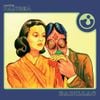

By focusing on the core human elements and paying credence to the future that may or may not come, Butler and Pallett successfully created a portal for any filmgoer today to walk into. That’s not exactly the job or role of a composer, but it’s the mark of a great one.
12y

It’s a loud record, but everything’s all there. It shakes, it rattles, it rolls, and that’s sort of a nagging issue.
13y
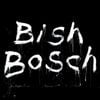
While Bish Bosch isn’t nearly the departure The Drift was six years ago, there’s a sharper attention to detail and a much broader scope at bay, one that would shake the boots of even the strongest composers worldwide.
13y

In turn, it’s less a collaboration and more a tutoring session on how new tricks can sharpen old perfection.
13y

Too many bands have attempted to adopt that fractured Manchester sound, but Holograms sweeps up the pieces, tosses most in the trash, and yet saves just enough to make their own.
13y

It’s a loud, abrasive record that, in the end, feels pretty damn inspiring.
13y
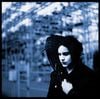
He’s a little scatterbrained on Blunderbuss, as if he’s still shaking up his past to move forward into the future, and as a result, Jack White represents everything Jack White has already accomplished.
14y
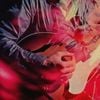
With Kill For Love, it almost feels like the man’s true thesis, as if he’s strung together all his ideas, feelings, and sounds into one colossal being that acts less like an album and more like a highly organized archive.
14y
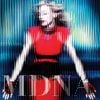
Whereas she used to craft dizzying spectacles that were both insightful and emotional, she lays it all out here, bolds the key terms, and highlights the fluff.
14y
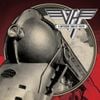
A Different Kind of Truth offers the same youthful escape that sold the band to millions worldwide over 30 years ago.
14y
With Attack on Memory, Baldi’s never felt more alive or more authentic.
14y
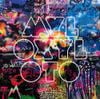
They’re attempting to breach their comfort zone, and they’re definitely drilling away here, but it’s questionable whether or not it’s in the right area.
14y
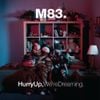
Although Dreaming sports slower, more introspective ballads, there’s also a pantry’s worth of interstellar jams, chock full of sounds you’ve probably never heard before.
14y
![Nirvana - Nevermind [20th Anniversary Edition]](https://cdn2.albumoftheyear.org/100x0/album/nevermind-20th-anniversary-edition-2.jpg)
The first disc is relatively pointless in this two-disc effort. Sort of. There are B-sides (“Aneurism”, Curmudgeon”) and a slew of live cuts (“D-7”, “School”), but it’s really the second disc that turns heads.
14y
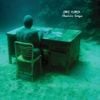
With such little variety, Ukulele Songs becomes a chore to sit through.
15y

On Destroyed, it’s as if his scope was all encompassing, which, regardless of the artist, will always result as clustered and unfocused.
15y
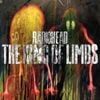
It’s essentially a 37 minute jam session; one where they’re carving out their current sensibilities and seeing where they run.
15y