
90
The History of the Albums – n°275
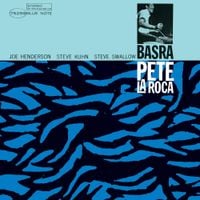
It is true that there are so many talented jazz drummers in the history of music that it is normal that Pete La Roca is not taken for granted. On the other hand, it is unthinkable, even criminal, that he would never be cited, to such an extent that the Harlem native was a remarkable composer and an irreproachable luxury partner. If you were planning to start a jazz band at the time, you can trust Pete La Roca's abilities and incredible professionalism with your eyes closed. A rather sober playing, which seems shy but perfectly transcribed. Throughout his career, Pete La Roca has built this magnificent reputation that has earned him so much praise, yet he has not gone down in history as some of the more popular have succeeded. There are, of course, several reasons for this. First of all Pete La Roca was a discreet artist, who worked in the shadows to make others shine. As you know, a jazzman who makes history is an artist who almost invariably achieves great prowess as a leader, something that Pete La Roca never really succeeded in doing. Yet despite 2 albums as a leader, Basra (1965) and Turkish Women at the Bath (1967), Pete La Roca is a victim of his lack of recognition by the general public, casting a shadow over his 2 fantastic works. Believe me, you're missing out on some really amazing things. That's why today we're going to plunge into Basra experience, a breathtaking album that testifies to all the greatness of Jazz.
Born in 1938 in Harlem, Pete La Roca was destined from the cradle to become a professional musician. Let's just say it was almost impossible for him to escape. Coming from a family of musicians, be it his parents, his uncle or his entourage, Pete La Roca started learning music at a very young age, something he would continue after school. Pete grew up within an Afro-American and Latin jazz culture, which will characterize him throughout his career. It was in Latin jazz bands that he began his professional career. Pete la Roca was not only a drummer, he was a complete percussionist who had the gift of transcribing a score perfectly without erasures and without any real excess. While performing in 1957 at Birland, a well-known jazz club, the legendary drummer Max Roach fell under his spell and recommended him to Sonny Rollins, who at the time was the Hard Bop star of the moment. Thus he will assist the drummer Elvin Jones on Sonny Rollins' live album A Night at the Village Vanguard by playing on A Night in Tunisia (afternoon set). Note that this live album is considered a classic of the genre, which explains how Pete la Roca's career took off after that. Yet it didn't last very long, for reasons I don't know. In 1968, Pete La Roca decided to end his career by becoming a cab driver. During his 10-year career, Pete La Roca was mostly a sideman, without knowing whether it was a voluntary choice or not. I think that his discreet and perfect nature prevented him from being talked about as an atypical personality, where some percussionists managed to differentiate themselves. It may also be a purely personal choice.
After having worked as a sideman for famous jazzmen such as Jackie McLean, Slide Hampton, Booker Little, George Russel or Joe Henderson (in order), Pete La Roca signed a distribution and production deal with Blue Note to record his first album as Leader in May 1965: Basra, a deeply underestimated work. Accompanied in quartet formation by Joe Henderson, Steve Kuhn and Steve Sallow (the last 2 are at the time talented young jazzmen, who will globally have remained men of the shade also), Pete La Roca knew how to show all his genius as a conductor. He who was always used to obey the directives of his various leaders without flinching once, Pete La Roca finally had the opportunity to show at some point he also knew how to be a fabulous leader. Basra is a demonstration of Hard Bop/Modal Jazz fused with a Latin Jazz aesthetic, which is so enchanting that this masterpiece touches me every time I listen to it. The album opens with the grandiose adaptation of Malaguena, a Cuban composition by Ernesto Lecuona. A standard of Latin music that has been covered many times, notably by Connie Francis in 1960, a pop star of the time. However, with the transformation offered by the quartet of La Roca, Malaguena shines like never before, and that for 9 minutes of happiness. Behind the aspect of simplicity that emanates from all the compositions, Basra is actually marked by a deep complexity that corrects the limits of cover versions and accessibility. Pete La Roca, whom we hadn't often seen at work in the past, gives us here 3 of his own compositions, Candu, Tears Come from Heaven and my favorite of all the eponymous title Basra, a crazy composition which tends towards free jazz with its surprising improvisation and its tortured structure. And then of course there's Lazy Afternoon, the standard that became the most popular song he played during his career. Lazy Afternoon is an elegant ballad, based on extreme softness, like an infinite caress for your eardrums. There are a few hypnotic things that either nail you to the ground or, on the contrary, lull you into weightlessness. It's simply beautiful. To conclude, don't make the mistake of many jazz lovers who do without listening to the little known Pete La Roca. Basra will give you an incredible moment that you will remember
Comments
Sign in to comment.
Related Content
Advertisement

Rate and review albums along with the AOTY community. Create an account today.
Become a Subscriber
Subscriber badge, no ads + more benefits.
Subscriber badge, no ads + more benefits.