


In the Court of King Crimson is an album that represents the character of 1969 with a British aesthetic in its pessimism, and on the surface clearly reflects that with the paranoid and pessimistic atmosphere of the album that echoes the collapse of the idealism of the 60s. But what is interesting about the album is the human way the work creates a mental state in the face of an apocalypse.
Especially on the first track, which for me is the peak of the LP, 21st Century Schizoid Man makes this ... read more
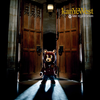
At the climax of nearly every track on Late Registration, you can hear a grand, orchestral tone. This happens because the sound itself becomes a translator of two sides of Kanye’s story. He talks about success, about overcoming his struggles, while also sharing his achievements with his roots. The violins, the majestic sounds, all become symbols not only of the grandeur he refers to, but also of orchestral, high culture. This then blends with hip hop, which represents marginality, the ... read more

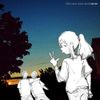
The Now Now and Never is a session of nostalgia.
Right from the title, the album already introduces this idea: the now, and the never, the present immediately cut off by the “never again.” Through this, the project presents its theme in an implicit but impactful way, because it summarizes the entire feeling of the work.
The songs have a shoegaze sound that couldn’t be replaced by just any ethereal style. Shoegaze here is a blurred sonic structure that is still warm at its ... read more
Los Angeles is an experience of dissociation that makes the listener feel, both physically and psychologically, inside the city of LA and everything it represents.
Los Angeles has this fragmented sound that prevents any stabilization or sense of rest. FlyLo makes it so that the loop feels like it is constantly moving. But here it does not serve only the genre; applied to the context of the project, it portrays a facet of the city of L.A: the lack of silence, unpredictability, traffic, through ... read more
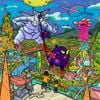
BIG MAMA establishes a unique atmosphere from its album cover alone. The cover is not merely decorative once you notice the parallel between the sound and the immediate introduction the album provides.
The sound, in my opinion, represents Flying Lotus at his most maximalist state. A clear example: open any track on the album and, in the rhythmic or percussive layer alone, you can identify at least eight instruments. The problem is that all of those instruments could contribute more to the ... read more
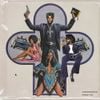
SCARING THE HOES is an album easy to interpret as a critique of the music industry. but that's obvious. if that were the case, every JPEG album would have only that concept, and they don't. the point here is that the work brings together JPEG's production — which breaks conventional hip-hop rules, critiques as bravado and internet references — with the intentionally raw lyricism of Danny Brown, who is responsible for the masterpiece that is Atrocity Exhibition. the ... read more

Kanye's apology stated that he regretted all the damage he had caused to those he loved, that he was not antisemitic or a Nazi, and that he would begin treating his bipolar disorder.
But every fan was on guard. Kanye had constantly cycled through highs and relapses, and one more apology felt like manipulation in a toxic relationship.
But BULLY shows that maybe he was telling the truth. Or that he desperately wanted to prove he was.
The strongest verse on the entire album, and one that ... read more
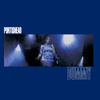
Dummy creates an aesthetic that approaches what we feel when we twist in bed while looking out at the gray window. The lyrics frequently reveal that the album is not just lonely. It is distrustful of intimacy. There is emotional paranoia there. A fear of opening up and, at the same time, an absurd hunger for it (Glory Box).
Trip hop as a genre here is metaphorical: hip hop, a genre that exudes the concrete, is slowed down to silence, as if the urban environment were saturated. The samples and ... read more
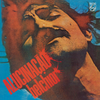
alucinacao do belchior eh um album que marca o pos tropicalismo na musica brasileira, num momento onde a cultura hippy e o discurso liberal do mesmo ainda estava morno, mas esfriando.
apenas um rapaz latino americano cita a tradicao tropicalia baiana (“antigo compositor baiano”) nao como ataque pessoal, mas uma critica ao otimismo do tropicalismo, como se a ironia, a expressao livre artistica, e a inovacao sonora fosse suficiente pra cobrir a ferida do trauma historico brasileiro. ... read more
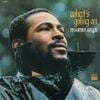
Marvin Gaye releases this album in the context of 1971, a moment when the world was in sociopolitical chaos: global wars, dictatorships, revolutions, and several social problems such as racism and inequality. In a time when Martin Luther King and Malcolm X were dead, hope seemed to have died as well. Gaye does not withdraw from this reality or observe it from the outside; he is embedded in the trauma.
The work, however, does not reinforce a pessimistic atmosphere. Instead, Marvin Gaye contrasts ... read more

In DBD, Pusha T has very consistent lyrical peaks, even better than his other highly acclaimed albums like It’s Almost Dry or DAYTONA, which obviously makes this a very underrated album. Push goes from a socio-cultural commentary on hip-hop in Sunshine to a deep portrait of coke rap in Crutches, Crosses, Caskets, with the title itself being an example of this quality, using the three symbols applied to the culture.
And not only in these two tracks, the entire work seems much more mature ... read more
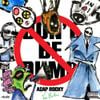
DONT BE DUMB comes after a 7-year hiatus, and here Rocky experiments a lot: he combines rock (PUNK ROCKY), trap (HELICOPTER), and even jazz (ROBBERY), always with ethereal vocals and synths, where the sound seems to float. Technically, the sound does not disappoint.
However, the album’s main problem is inconsistency: some tracks have many disposable verses, like ORDER OF PROTECTION, which uses various images and rhymes but doesn’t serve any theme. Here, Rocky seems to forget what he ... read more
relisten 1: 96-98
Frank Ocean here evolves even further his poetry, concept, and ambition. Blonde alternates entirely between acoustic guitars, intimate instruments, synths, and ethereal vocals that sound like distant memories, and sounds that seem like glitches, as if something is wrong. In parallel, Frank’s almost poetic lyricism narrates about girls he dated, his childhood, and memories in general. The work perfectly integrates concept and sound.
Interpretatively, Blonde is even ... read more
The Low End Theory was released at a time when hip hop featured dense productions, flashy samples, melodies, and strong bass. Q-Tip deliberately takes a step back here, essentially saying that “progress is not always about adding more flashy elements.” In parallel, the album returns to the roots of jazz, not only as a sample source, but as a structure and a cultural symbol.
Here, samples are used in a more discreet way: most of the time, there is a swung boom bap beat and a bass ... read more
Homogenic by Björk was released in a context where the artist was experiencing turbulent emotional moments, such as relationships and her child, including an interest in musical technology and electronic beats.
Even so, Björk does not lose the integration between theme and sound: the context here is clearly reflected. Björk uses her dramatic voice and crescendos of violins as emotional and poetic translators (e.g., Hunter), and drum machines and experimental sounds as a ... read more
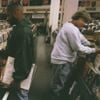
Endtroducing….. was released in 1996, at a time when hip hop was exploding in its formative years, and DJ Shadow presents a probable future of the genre here.
He strips identity away from the MC’s words and transforms it into environment. At the time, samples were either simple or treated like prized artifacts in a hunt for the perfect record; here, Endtroducing… uses them as a living system. Beyond that, the most notable characteristic of hip hop was rap itself: the MC over ... read more
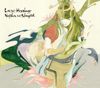
The album is a compilation of tracks made over different years, starting in 2001 and ending in 2010, shortly after the producer Nujabes passed away. The same producer already creates an emotional channel here through intimate jazz samples that Nujabes shapes to sound ethereal, like memories. Considering the context, it is a sad perspective: Nujabes producing a sound that could very well be the soundtrack of his life, and his legacy in music. One cannot ignore Shing02’s verses, which give ... read more
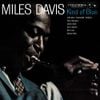
The album innovates by using silence and suggestive rhythm instead of the common bop jazz of the time, and technically it does not disappoint, but it also adds nothing.
Kind Of Blue does not want to convey anything. It does not build tension, it has no concept, it has no solid atmosphere to construct. It is just a black-and-white portrait of a new phase of jazz at the time.
The delivery does not surprise at all, and the revolutionary value it offers is minimal. Whoever gives this a 100 gave a ... read more
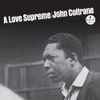
A Love Supreme by John Coltrane uses pure jazz to solidify a portrait of spirituality.
This album is often referred to as the pinnacle of jazz history, or as something about spirituality, and all of that in a shallow way, as if Coltrane had thought only about this during its creation. Beyond these superficial labels devaluing the work, they also create a paradigm around it. First, Coltrane himself explained what the album was about. The record included a poem in homage to God, a message that ... read more
Create an account to rate and review albums.
Recent Review Comments
On Cicicka's review of Miles Davis - Kind of Blue
"i saw your review before listening to the album, and you was right bro 😭✌️"
Advertisement