
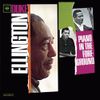
maybe i'm not as disposed to the big band sound as i'd like to be. whereas its 1960 twin "Piano in the Background" is a bustling set of the big band sound emphasising busy-scape, "Piano In The Foreground" evokes timelessness with Ellington and his repertoire's understanding of piano as the faint voice.
from feelings of "c'est la vie(!)" to "until the next life(...)", this record is one for the ages, as time slips away.
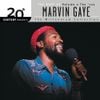
for a decade in his career that, really, holds only two essential albums for any music collection, Motown's 2000 compilation of 1970s Gaye is a concise retrospective that rids of the fluff. this CD release addresses his career post-Motown sound that 1974's "Anthology" missed out on with only those two albums.
including a solid unreleased track, the 1970s disc of "-Best of Marvin Gaye" works succinctly in capturing Gaye's self-actualisation years.
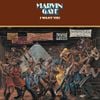
it’s a stylistic enhancement from “Let’s Get It On”, with Gaye setting up “I Want You” as the suite-experience, but the style tires very quickly - despite a carnal title track and “After the Dance” as a decent closer, the rest are the usual fare of 1970s coo-ing R&B that doesn’t inspire much significance.
"I Want You" isn't as arousing as the wide allure suggests, moreso an excess of studio gloss about blasé lust.
contextualise this album in the post-pandemic era, simmer in the liberating fusion of Afrobeat and American R&B by Monae, and allow yourself an open mind to the utility of naming this album "The Age of Pleasure" - here is a life-affirming record meant for a most aural of parties.
good times simply aren't meant to last. finishing past thirty minutes, Monae celebrates impermanence and propositions a succinct party, most ready for a coming rapture.
enjoy yourself. swim in it.
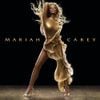
coming off from her sleep-inducing albums throughout the 1990s and 2002's "Charmbracelet," "The Emancipation of Mimi" is liable to stun you with this vitalised Carey - none of the tracks disappoint, but are back-to-back magnetic, even the ballads.
in my respectful opinion, this is such an energising "comeback" album on par with Tina Turner's "Private Dancer". a pop album truly worth re-visiting.

“The Rise and Fall-“ is a triumphantly queer statement, excessive in Roan’s fierce lyrics and unashamed between the sunbursting and melancholic sounds.
but it says a lot about the artist's integrity that the team of writers is dozen-plus, moreso with a final production that resembles the glossy mundanity of Taylor Swift's bedroom pop and lame EDM.
also, does anyone feel like this album is vaguely capitalistic? hetero-pessimistic, feminist messaging and all?
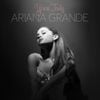
there is an insistence in “Yours Truly” of how great a poster girl for pop this unassuming Nickelodeon gal could be – the unabashedly peppy, early-2010s pop compliments Grande’s sheen voice entirely, making a listening of straightforward glee for popheads (barring "Almost is Never Enough" and "Popular Song", especially the latter, yikes).

it seems to me that “The Fame” would’ve been more indisputably iconic if it lasted around half an hour - a 15-song release clocking at nearly an hour is excessive for a debut, so the end result from Gaga is an album delectable in its first half but really dragging afterwards.
all the songs after “Beautiful, Dirty, Rich” lose their glitter once you realise that this is going to be a drawn-out rehearsal of a fun time.
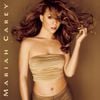
five albums into her career, it seems like Carey must've really believed in the power of these overbearingly carressing songs.
her first album was appropriate for a debut, a (too-consistent) collection of ballads, but one can't be interested in hearing the same tracklist idea over and over, merely set to a changing R&B soundscape. even at that, her musical evolution and occasional upbeat songs cannot save a whole-album listening from those sleep-ifying ballads.
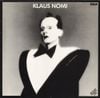
there is hardly anything like this, combining opera and glam rock to an art scene persona - an original, interesting concept with first-class vocals by Nomi.
however, you will find the production quite bland. the glam rock elements unadventurous for Nomi's singing, and the electronica too ordinary as edge. moreso, the triumphant focus on Nomi's image is unpalatable - the album's attraction of theatrical operatics removes ubiquity that's characteristic of enduring music.

hardcore "woe is me" bemoanings over sex and drugs (and whatever you can discern through the warbling) at an ear-damaging fidelity for an hour. it also suggests, unironically, that angsty discordance is a valid mindset - this is identifiable to wimps who think juvenile moodiness is a hardship.
the happier, the smarter. cope!
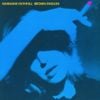
Faithfull mounts her niche in the pop-rock realm with the urban grittiness of late 1970s new wave that so-fittingly suits her voice and demeanor, an attitude hardened through the years by drug abuse and homelessness.
"Broken English" is an album that ages like fine wine to people who have felt spite and seen life's irony - disdain and maturing to the sound of jagged, Cold War-inflected art rock.
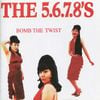
such a fresh blend of interest on a period sub-genre of rock, and just so happens to channel a shrewd, bull-headed spirit alike with Yoko Ono circa "Plastic Ono Band" or "Fly", yet instinctively fun akin to the debuts of the B-52s and Talking Heads - a work of spirit regardless of contemporary era.
besides clearly being a camp act that exhausts its fun with excessive plays, there is almost nothing bad to express about this obscure band's breakthrough release.
i'm a bit shocked that publications and netizens are in happy consensus with this album. really, "To Whom This May Concern" falls into the same category as "The Light of the Sun" and "Woman" - vanilla releases that don't introduce much after a musician's prime, in their cases R&B albums reusing the same self-help topics and sounds. the only vaguely interesting song was "Pay U on Tuesday."
11 years and nothing surprising to say.

inducting the new synth-based decade, a pleasant electro-funk album of urban sensibility - but "pleasant" is what it merely is, as half the tracks drag in an awkward or inappropriately sentimental manner ("Brand New Player," "Be Alright," "Coming Home") with the other songs' fittingly anonymous, dance-hall sensation.
an uneven listening between songs that induce you into hypnotised bouncing and others that awaken you to R&B droll.

Zapp at their best effort in making wholly-consistent listening, even the meandering tunes ("Playin' Kinda Ruff," "Do You Really Want an Answer?," "Come On") make the album feel connected with the more ear-catching dancefloor jams.
for casual listeners, probably their only studio album worth collecting on its own, but listeners disposed to R&B may find this extensively useful for parties and personal enjoyment.
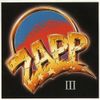
the last Zapp album that felt like any fun excursion of electro-funk - outside the back-to-back dance-a-thons "Heartbreaker" and "I Can Make You Dance," the songs become plain and the same, worse yet when it's half the album remaining.
unfortunately, Zapp will remain a stagnant act for early-80s electro-funk. it's best to get "All the Greatest Hits" from this point.
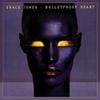
whereas "Inside Story," despite its humdrum production by Rodgers, at least resembled Jones with the wacky titles, any semblance to both her striking persona and piquing production of the early-80s is abandoned - with mundane late-80s tunes and run-of-the-mill amorous writing, "Bulletproof Heart" was monotonous.
tellingly, her last album until 2008's "Hurricane" - Jones ends her downward spiral of wearisome albums post-"Nightclubbing" lamely.
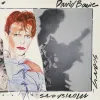
Bowie transitions into the 1980s by taking a break from any conceptual exercises - "Scary Monsters-" doesn't boast much trademark progression after the travelling crypticism of "Lodger." rather, Bowie finds familiarity in cold new wave with an album that sears and climbs for the most part (in the vein of Fripp, retiring Belew).
a most commercial sound since his R&B-laced period of the mid-1970s, he foreshadows his works for the upcoming decade, for better or worse.
the daydreaming, intimating juvenile on his previous album morphs into this sex-furious deviant, now proficient in rocking-and-rolling both the guitar and the bed.
Prince, merely on his third album, teases the idea of rock visionary to a spry, timeless transgression of new wave and funk that'll never leave you blue-balled of a fun time.
Create an account to rate and review albums.
Recent Review Comments
No review comments
Advertisement