
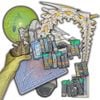
Theft World rocks you around with constant momentum, never tapering off from the very beginning. On this record, Lip Critic constructs a flawlessly executed ride of jolting energy, enough to make Theft World a must-hear of must-hears for fans of industrial music — It’s addicting.

Out of the three Iceman era records, MAID OF HONOUR is the one designed for the club. The highlight moments on this project contain some of the best out of all three Iceman projects: namely Hoe Phase, and the backends of BBW and True Bestie. The best moments on this project will definitely get people moving.
However… a lot of MAID OF HONOUR is sleazy to the point that large portions of it are practically unlistenable. And tallying the record, it’s easy to see that these ... read more

ICEMAN, unlike its two sister records, releases some of the tension Drake had accumulated throughout the beef, resulting in a mostly well articulated and well produced package of tracks. Evidently, Drake is feistier than ever on this project, in light of his conflicts with UMG, burned bridges, and miscellaneous “haters.”
This energy proves to be fundamental to strength of ICEMAN, but also occasionally leads to a few embarrassing “tough guy” quips throughout the record. ... read more

Angine de Poitrine demonstrates a lot of talent on Vol. II, with rhythmically and harmonically complex riffs and chaotically evolving drums. Particularly, what this record accomplishes incredibly well is rhythmic tension; when the overlapping riffs lay down these complex rhythmic structures, the drums do an incredible job at shifting around the fundamental timeframe throughout each song, easing some of the repetitiveness present within the other aspects of Vol. II’s production.
That ... read more
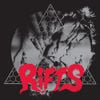
Rifts is a very proper culmination of early works from Daniel under his now most prominent pen name, Oneohtrix Point Never. The curating for this record is very nice, leaving out most of the unsavoury cuts from this era of his discography. Even outside of the three studio records represented in this compilation, the majority of these tracks provide quite an astounding synthesis of sound and emotion for being so early into Daniel’s development of his craft. Ships Without Meaning, Blue ... read more

The top to bottom production on slayr’s BloodLuxe is worth its weight in gold — and this album is heavy…
Truly, this record joins the ranks of Magdalena Bay’s Imaginal Disk and clipping’s Visions of Bodies Being Burned as some of the most innovative feats of sound design in the 2020’s. Tracks across both the original and deluxe sides of this project have pushed the envelope for what the underground rap scene can sound like; tracks like Daytona, Died But ... read more
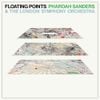
The methodology behind the instrumental pallet of Promises, and how it shifts around this single, seven-note fundamental riff — it makes the sound so delicate and glorious. And it’s raw; you can hear the human and the history behind Sander’s breath, and you can sense the space of the recording with every click, crack, and squeaking floorboard that cuts through into the music.
I appreciate that Promises is never larger than life, but precisely the same size, because it really ... read more

James Ferraro’s Far Side Virtual is one of the most interesting and immersive album experiences you can find in the world of electronic music. The very specific and intentional choices of “cheap sounds” picked for the composition of this record encapsulate an early internet nostalgia to an absurdly surreal degree.
Ultimately, this album was extremely forward thinking in this particular parody of early internet aesthetic, the likes of which can still be found in short-lived ... read more

eel’s dead load is an extremely poor batch of asynchronous genres, none of which build upon each other to create any semblance of good musical pacing. Further, the recording and mixing is just atrocious, and not in an endearing way like you would find on something like James Ferraro’s iAsia, or even Tyler, The Creator’s Cherry Bomb to some extent. dead load is a messy project chalked full of unnecessary and flat jazz flourishes that add very little enjoyment.

Yebba’s Jean is a harmonically deep and genre-bending experience, making each next moment thrillingly unexpected; every next note is musically refreshing, and every next song takes you completely by surprise. The album cascades from genre to genre, but is completely organised in a way that builds to an immensely cathartic climax by the end of Earth, Wind, & California and begins to calm down throughout album’s back half.

Orange 2 is a noisy album, but extremely controlled and direct in its purpose. This project is a celebration of noise, and the duo produces in a very forward thinking, highly thought, and highly executed manner.
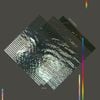
While Returnal is impressive in scope, it just doesn’t stand out in a catalog as versatile and rich as Oneohtrix Point Never’s. The synth and pad work isn’t as fluid and dynamic as newer projects like Tranquilizer, or even some older works like Betrayed in the Octagon. Again, Returnal is an impressively refined piece of art — as is most of Daniel’s work — but it isn’t him at his most creative, at least in my eyes.
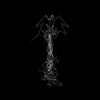
Garden of Delete completely shakes up Oneohtrix Point Never’s sound. Exuberant rock, noise, and sample work orbit throughout the record to create this wonderful and mesmerising three body system of completely groundbreaking electronic sound.
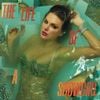
While it definitely has its moments and even a few good songs, Taylor Swift’s music no longer has the artistic depth to compete with exemplary projects like Folklore and Evermore. And lyrically — some of these tracks are just embarrassing.

Tha Carter IV delivers a quite a lazy end to an otherwise great series of albums. A couple of good passages spring up here and there throughout the record, but the bulk of it is just unacceptable — and the lows are abysmal.

While Totojira’s production is decent on Whirlwind!, Xeno Ray JNB’s performance completely obliterates the project. The vocals are some of the worst I’ve ever had the displeasure of hearing.

Ever since the beginning, AJR has produced experiences that barely breathe life into the upbeat sounds they choose to craft with. The selection of tracks on Living Room proves that the trio has no artistic filter and will release whatever hokey-pokey nonsense speaks to them at the time.
Katy Perry’s music has lost all soul and all substance. 143 is hardly even a husk of an album like Teenage Dream; there are no moments of creativity, the production and mixing is extremely poor, and even the selection of talented featured artists deliver middling performances.

Welcome to the Madhouse is near void of anything that makes music artistic and engaging. There is no transaction of musical intent and enjoyment between artist and consumer here. Ultimately, it manages to be infuriating in every stylistic decision for 46 entire minutes.
Create an account to rate and review albums.
Recent Review Comments
No review comments
Advertisement