


Several tracks in, I realized that production is this album's greatest asset, which should not be surprising after checking out credits for this. Producers and writers with a Neo-Psychedelia background contribute, the result shouldn't be too bad, right?
And there lies one of my issues with this record. It's solid psychedelic rock/soul. But there's nothing too sonically exciting happening and makes me think of Tame Impala at some moments and a worse version of Astroworld-era Travis Scott at ... read more
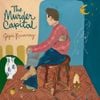
Gigi's Recovery by The Murder's Capital should put an end to comparions with Fontaines DC, which go for vastly different music paths now. The Dublin band approaches recoveries in a subtle way that allows us to notice their innate complexity. Music, too, showcases their newly developed variety with more upbeat production added.

The boy band frontman's solo project is not unlike what Kanye West did in the past ten years, be it plentiful soul samples or undercooked production that West went for in the latter decade. But the pacing just doesn't feel right for a farewell album; closer "Brockhampton" doesn't sound like a proper ending. Perhaps that's why the real (??) goodbye "TM" exists.
Turnover's unexpected transition to Boogie and Neo-Psychedelia unfortunately offers little more than shock value. The riffs are quite lethargic, the four-on-the-floor beats standard and their delivery nearly mechanical. Only when they, perhaps unknowingly, display their former melodic sensitivity, does this album give out a glimpse of promise, which was never fully fulfilled.

A welcome detour from the regular Ashley McBryde album cycle. She's not as present as in her proper albums, leaving the stage to her collaborators; a thirty-minute runtime limits the development of its stories, resulting in a more segmented narrative. Musically, Lindeville is not so much on the rock side as McBryde's first two are, delivering in a more collected manner, and even T.J. Osborne has followed suit. Anyway, the release of Lindeville is itself something worth celebrating, and they ... read more
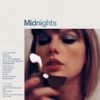
The Dessner-produced, soft rock-leaning tracks could sit comfortably on the latter half of evermore while Antonoff's offering include both nighttime synthpop like the original edition and Lover-esque upbeat pop. The Great War’s indietronica guitar playing of noughties is already nostalgic; it's enhanced by Swift's airy delivery, especially the way she sings the last syllables of each line in verses. Bigger Than The Whole Sky is the atmospheric ballad that fans of The Archer would love. ... read more
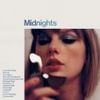
After two lockdown records of character study, Taylor Swift returns with an album that stylistically leans more heavily to her pre-pandemic work, but the Pop here sees evolution of Swift's already-skillful songcraft.
A synth-heavy album, Midnights is frequently compared to Swift's previous efforts, namely tracks from 1989, reputation, and Lover, particularly the songs False God and Call It What You Want. The atmospheric synth pad and sub-bass are indicative of the album's nocturnal sounds ... read more
With Sawayama, there seems to be no ending for the cheap nostalgia of noughties and 10s (?!).

Surprisingly enough, Mura Masa's third album, written after the pandemic hit, is one that brings the audience back to the dance floor, perhaps thanks to the amount of cold reception his second received, a disastrous guitar/"emo" record that seemingly no one cares about. Not quite a return to form, though: demon time is stuffed with far too many early 00s UK hits references, and Zoomer hyperpop that by this time one has grown tired of. Melodies are weak, too.

A perfect soundtrack to the fall. Orton's piano sounds have a spacious feel to it, as well as the psychedelic synth drones reminiscent of a less indulgent War on Drugs, which are enhanced by jazzists' rhythm section and saxophone playing.
The unusual cracks in her voice, however, remind one of Weather Alive's vulnerability. She is fascinated by season changing, overwhelmed by a memory of a lost friend she stumbled upon, and deals with different beliefs held by people as their coping mechanism ... read more

An exploration of pop punk and adjacent genres, Lovato's latest album might come off at first as a cash grab of 00s pop rock, but considering their career roots they may just be the most qualified one among their peers to do this, and their vocal approach fits much better here than in uninspired pop soul/adult contemporary sounds. Arguably their best in a while.
References abundant and rhyming schemes dense and ever-changing, new collaboration between the super producer and the hip-hop veteran creates great artistic chemistry that pays tributes to the genre's golden era without falling into retro pastiche cliches.
The untouchable savior brings her post-2013 overwhelmingness onto this new dance project along with braggadocios previously found on the Savage remix and occasional empathy with the ordinary (Break My Soul), all of which are at odds with the liberating and self-sustaining nature of the genre to begin with.
![周杰倫 [Jay Chou] - 最偉大的作品 [Greatest Works Of Art]](https://cdn2.albumoftheyear.org/100x0/album/525666-greatest-works-of-art-1.jpg)
The C-Pop superstar's tastes in his music and artwork have been getting worrying since the creation of his own label some ten years ago, a decline that continued in this atrociously named new album "Greatest Works of Art." Chou's "Western Style" belongs to neither contemporary times nor, say, the medieval period; it's more of some sort of imagination that Asian countries like China had of the West, when radio and tabloids were the only things that keep listeners informed ... read more
I have no idea how promoting "Juicy" to a ridiculous degree to just moderate success but obtaining two sleeper hits from previous works unexpectedly thanks to Tik Tok has affected her mindset. To me this album's biggest issue lies in the lyrics, with too many IG-Story-caption- and Tik Tok-challenge-worthy lines that have little more than shocking values. The self-empowerment and self-deprecation here could also use better craftsmanship.
'Memories' sounds like a melodious C-Pop hit and that's somehow the only redeeming point of this whole thing—it's just this generic
Ironically, the acoustic rendition of last year's widely acclaimed Blue Weekend offers better results only when the production is less reductive.
Drake's House detour works best while it leans to the reflective side of the genre.
Might just be the most unlistenable album of the year.

So, the Bowie wannabe in Styles' solo debut is just a phase. Although Fine Line was at times too radio-desperate with its overdone vocal delivery, its tunefulness is something to be appreciated. Here, Styles trades that for easy-listening pop that isn't anything new in today's mainstream pop landscape. Worse is that the pseudo-70s singer-songwriter-y acoustic pastiches in the middle which are just sleep-inducing. And the technique-reliant production gimmicks do not offer any catchy hooks, ... read more
Create an account to rate and review albums.
Recent Review Comments
On Wednesday - Bleeds
"@Mellope I just wish the melody could be stronger"
On JADE - THAT'S SHOWBIZ BABY!
"@Mellope thanks!"
On Maroon 5 - Love Is Like
"@Mellope I could tolerate a couple of songs"
On Ninajirachi - I Love My Computer
"@Mellope Yeah been on the road for a bit but I’ll be catching up!"
On Justin Bieber - SWAG
"@Mellope thanks as always ; ))"
On Justin Bieber - SWAG
"@Mellope yes!"
On Loyle Carner - hopefully !
"@Mellope Had to give this the deep dive it deserves. Hope you enjoyed it too!"
On Stereolab - Instant Holograms On Metal Film
"@Mellope favorite is the 7th track"
On Gracie Abrams - The Secret of Us
"@Mellope this is simply unbearable"
On billy woods - GOLLIWOG
"@Mellope this one is more in the 'abstract' vein and doesn't do as much as his last for me musically, but if you like this genre you'll like it"
On billy woods - GOLLIWOG
"@rivejso 68 and Fantano's 7 are literally neighbor scores, but keep crying 'd riding' while you're deepthroating that 100. x"
On Morgan Wallen - I'm The Problem
"@Mellope I think he's decent musically most of the time for what he does"
On Kali Uchis - Sincerely,
"@Mellope not liking the direction she's taking"
On Michael Kiwanuka - Kiwanuka
"@Mellope you very likely will, amazing stuff"
On Viagra Boys - viagr aboys
"@Mellope right, especially considering his hip hop-leaning audience"
On Viagra Boys - viagr aboys
"@Mellope If the singles didn't grab you, you're probably making the right call, they're definitely the standouts. I don't mind the deeper cuts, but they mostly just blend into the album's messy vibe without adding much"
On Lorde - What Was That
"@Mellope it's indeed not as immediate as Melodrama"
On Lorde - What Was That
"@Mellope Ha, trying to catch up"
On Selena Gomez - I Said I Love You First
"@Mellope not much joy indeed for an album like this"
On clipping. - Dead Channel Sky
"@Mellope it's lesser than the sum of its parts"
On Magdalena Bay - Imaginal Disk
"@Mellope for sure"
On Lady Gaga - MAYHEM
"@Mellope True, she’s dabbled in rock before (Joanne and those BTW cuts) and old-school balladry (Shallow). But Die With A Smile just feels thrown in for the charts, not the ‘mayhem’ vibe. And those disco-funk tracks are tightly executed, perhaps fairly new to her, but really not that groundbreaking in 2025. Still, a polished package (63 is actually a pretty decent rating for me), just wish it went a bit harder"
On Lady Gaga - MAYHEM
"@Mellope Totally get why you’d rate it higher. Production’s undeniably tight, but the tracklist feels like she’s playing too safe after years of reinvention imo. Still a fun ride, just wish she’d fully commit to the mayhem haha"
On Taylor Swift - THE TORTURED POETS DEPARTMENT
"@Mellope the production choices and tracklist length are valid criticisms. But for me, the writing outweighs those flaws, the lyrics feel sharp and intentional"
Advertisement