

Breathtaking. Daniel Variations is a prodigious work by Steve Reich. The combination of pianos, choir, and bowed strings works perfectly. The piece is interesting in a way that falls somewhere between Music for 18 Musicians and his vocal works. And when you know the context of the work, a tribute to the late journalist Daniel Pearl, brutally and humiliatingly murdered by Al-Qaeda, a deeply moving dimension emerges.

With Atmosphere, György Ligeti offered avant-garde training music for 1961, proposing an alternative to serialism in registers we might now call ambient. The work would be immortalized in Kubrick's 2001: A Space Odyssey. Other pieces included here, such as Volumina and Lux æterna, clearly demonstrate the evolution of Ligeti's music in the following years.
Boulez has always been a major figure in contemporary classical music. From a French perspective, he founded IRCAM (Institute for Research and Coordination in Acoustics/Music) and the Ensemble Intercontemporain. He held a chair at the Collège de France and influenced the construction of the Opéra Bastille, the Cité de la Musique, and the Philharmonie de Paris, whose main hall bears his name. In short, his impact is undeniable. Now, let's get to the main subject: Le ... read more

While acknowledging Boulez's impact on contemporary French and international art music, and the major role of his pieces in integral serialism, Structures I and II leave me cold, with a profound sense of boredom and the impression of listening to notes played at random, even though I know perfectly well that this isn't the case. Furthermore, Polyphonie X, composed a year earlier by him, seems to me more developed and is much less boring. In short, respect to Boulez, butwithin the body ... read more

After 13 years, Boards of Canada makes a triumphant return. Inferno offers more than just an album; it's a captivating, powerful, and cryptic experience, with a mysterious and slightly unsettling atmosphere reminiscent of Geogaddi. The themes and ambiance almost echo our current reality, giving the album a deeper, second layer of meaning. In short, Inferno, besides being a major event for all fans of the Scottish duo, transcends the status of a mere album to become a complete and immersive ... read more

Honestly, I was expecting a lesser album than this. It's not perfect, but Paul achieved a more experimental sound than anticipated on this project, and several tracks are quite enjoyable. The only major drawback is the production, or rather overproduction, by Andrew Watt, which could be described as sonic terrorism.

The return of GY!BE's musical identity. After two mediocre albums lacking originality, G_d's Pee AT STATE'S END! offers the return of their epic and captivating tracks that made me love their music. The tracks have room for improvement, which will be addressed in the next album, but overall, it's a very good project.
This album is just like the last one, which wasn't particularly good, but with even less of a distinct identity. It sounds almost generic and bland. It’s sad for a band like this, which otherwise has such a strong aesthetic.
GY!BE's musical identity is still very much present, but it seems less powerful than in their other projects. The tracks lose some of their hypnotic quality, except for the last one, which recaptures the sounds that make their music so special. Probably their weakest album at the time of its release.
I didn't like it. I found it quite difficult to listen to, a lot of noise that doesn't add much to the final product. There are some good ideas scattered about, but it's not enough to create a coherent project. In short, a lot of uninteresting tracks and an "album" that sounds more like a collection of studio practice sessions and demos than anything else.

Two very average tracks for an overall result that, I'll give you a hint, is very average. It's not very inspired, rather boring, and unfortunately, I find very little of Godspeed's signature style. Oh well; missteps happen.

The beginning of serialism. Pierrot Lunaire is a rather perplexing work, laying the foundations for a completely new genre of classical music. Schoenberg's approach is extremely avant-garde; incredibly, this work was written a year before The Rite of Spring. If I had to describe it, I would call it a blend of Lieder and pre-Stockhausen music. However, I won't lie, I don't really enjoy listening to it. My rating isn't very important, to be honest, because it's a mix of ... read more
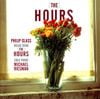
Yet another masterful soundtrack from Philip Glass, who clearly had plenty of material up his sleeve in 2002 between this and Naqoyqatsi. The tracks are majestic, and the atmosphere is perfectly controlled. The reprises of the theme of Protest from Satyagraha, Islands from Glassworks, and Metamorphosis II in the tracks I'm Going to Make a Cake, Tearing Herself Away, and Escape, while potentially seeming like poor recycling by certain people, are very interesting and fit perfectly into the ... read more
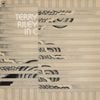
A revolution. At a time when serial music still dominated, Terry Riley presented In C, a foundational work of the minimalist music movement. Seen as a musical regression by some, even fascist music by others, this work was poorly received and viewed as a counterpoint to the trends in modern classical music at the time. These 53 sections, meant to be played for at least a minute but capable of being played longer, constitute an interesting, though perhaps sometimes overly long, panorama of ... read more
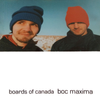
The beginning of the album is good, but the quality drops as it goes on, and I admit I got a bit bored towards the end before Turquoise Hexagon Sun. It almost feels like a bootleg. It's not bad, but the good tracks are already on other albums or EPs.
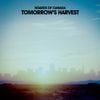
In a different vein, this album is very good overall, with an atmospheric and almost melancholic feel. Some tracks don't quite stand out as much as the rest of their other albums, and it's best enjoyed as a whole.

One excellent track isn't enough to make an excellent EP. Aside from Dayvan Cowboy, Trans Canada Highway is a rather mid project that feels like listening to tracks that didn't quite reach the quality level necessary for being in The Campfire Headphase.
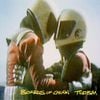
I found it rather boring, unfortunately. It's a shame because the tracks might have worked better in another context (and we see that with Smokes Quantity), but I think the project lacks an overall direction and can be a bit too repetitive.
I confess I'm a little disappointed with this EP considering the positive reviews and overall positive atmosphere surrounding it. BoC seems to be taking a more ambient musical direction with this project, and I admit I don't find exactly what I love in their music; it's not bad, but it doesn't resonate with me.
Create an account to rate and review albums.
Recent Review Comments
On Godspeed You! Black Emperor - "NO TITLE AS OF 13 FEBRUARY 2024 28,340 DEAD"
"@thefalsesamarit
I created a Google Drive link :
https://drive.google.com/file/d/1dvDhACCKq4UoN32jBvyVK-dEXJQzwHRL/view?usp=sharing"
On Godspeed You! Black Emperor - "NO TITLE AS OF 13 FEBRUARY 2024 28,340 DEAD"
"@thefalsesamarit Hello, I have the MP3, are you still interested?"
On maskimus's review of Gummibär - I Am Your Gummy Bear
"Je sais pas si il y a une réf particulière à avoir mais je suis mort de rire"
On Godspeed You! Black Emperor - "NO TITLE AS OF 13 FEBRUARY 2024 28,340 DEAD"
"@thefalsesamarit Hello, unfortunately I haven't been able to find anywhere to download the track. I don't see it on YouTube. I found a few links on Reddit, but the Godspeed moderators delete the posts to protect the band's music. A few things to help you in your search: the posts mention that it can be found on a GY!BE Discord server; I think it's also available on specialized software. I also think the easiest way would be to send a private message to people who say they can send it to you on Reddit. A few terms that might help you in your search: The track is called "untitled" but is more often referred to as "the D-side track.""
On Blablakillyou's review of Kendrick Lamar - GNX
"Je trouve justement cette album bien meilleur que DAMN. qui même si il a eu un beau succès manque une sorte de cohérence globale et d’une consistance globale. Dans GNX je retrouve certaines des meilleurs type de pistes de Kendrick : wacced out murals, man at the garden, hey now, reincarnated et heart p.6. Beef pour moi ça fait clairement des très bon album de Kendrick avec Mr Morales and the Big Steppers, TPAB et Good Kid M.A.A.D city"
On maskimus's review of Eminem - Houdini
"Mdr tu était énervé ce jour là 😅
Taper moi si vous voulez mais je trouve le son pas mal, il nous a produit des vraies bouse mais franchement c’est pas catastrophique"
On Kronos Quartet / Pat Metheny - Different Trains / Electric Counterpoint
"@maskimus ooops excuse moi, normalement j’ai envoyé une demande discord"
On Autechre - Confield
"@maskimus On peut dire cela, j’ai écouté Quaristice, même si c’est moins bien noté j’ai trouvé cela mieux"
On The Caretaker - Everywhere at the end of time
"@maskimus Le problème c’est la culture tiktok, en mode cette album va changer votre vie ou des gens qui pensent que on est sur un des plus grand projets musical de tout les temps. J’ai l’impression que cela joue beaucoup sur les appréciations alors que purement musicalement ce projet est pas parfait. Pour beaucoup c’est la porte d’entrée à ces different genre.
Je n’est aucun problème avec cette approche touchante de l’évolution de Alzheimer, le démence et même si je suis pas atteint de maladie neuro dégénérative ça a pu faire écho à des périodes de dissociation que j’ai eu. Le problème pour moi ce trouve pas sur le message de l’album mais sur ce qu’il a engendré"
On 🪓lexa ☮️💖☯️🤝🇵🇸's review of Kronos Quartet / Pat Metheny - Different Trains / Electric Counterpoint
"Different Trains is a work that refers to the tragedy that was the Holocaust and the hell of trains to concentration and extermination camps. It's meant to be anything but pleasant."
On Fripp & Eno - (No Pussyfooting)
"@Feelafel I had done this review mainly for Evening Star which I had listened to at the same time. I was not inspired for this album so I put the same thing back, which is indeed not a good idea. I am a little ashamed to be honest it is the first time I do this"
Advertisement