

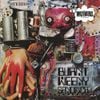
Their doo-wop detour notwithstanding, I would say this is the weakest Mothers record to this point. That said- Holiday in Berlin, Full Blown + the *gargantuan* Little House I Used to Live In still make this a necessary piece of The Mothers & Zappa's catalogue. Not much in the way of vocal-weirdness here- just let the wonky jazz-rock wash over you
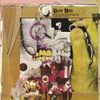
Some more sonic explosions and bizarrities from Zappa & The Mothers, with the group's core identity seemingly shifting like an amorphous mercury-laden alien from track to track here. I say 'track', but many of the cuts here exist in some strange limbo between a song, an interlude, and a cacophony of noise- you never know what you'll get as you move through Uncle Meat's hallowed halls
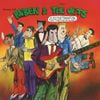
In ways it’s the Grandaddy of Ween’s 12 Golden Country Greats- in that, the joke is that there isn’t one. Zappa & The Mothers utilize Doo-Wop in many of their compositions, especially their works prior this, so in a way the sound is well-founded. The whole record sounds like it’s always *just about* to break apart and enter your expected zany, parodic territory- the fact it never does is nearly unnerving

Among the Mothers’ finest- a healthy heaping of sardonic parodies, sociopolitical commentary (comes with the territory with any Zappa project), and chilling instrumental/noise passages. Something for the whole family!
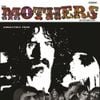
While The Mothers’ debut was, in no short term, weird, Absolutely Free manages to up the ante even more with some of the strangest tunes Zappa would ever put out. In particular, the ‘Great American Suite’ in the back half, a sort of Proto Abbey Road Medley as devised from Hell’s deepest cavern. Yet- there’s a catchiness to essentially every track here that keeps things humming along. Those Mothers really were inventive, mang
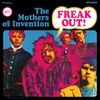
Is it Zappa's best? Begrudgingly no, though as a Weener (Ween fan, obviously) this style of rock music automatically latches onto me with incredible strength and intensity. There's certainly a parodic approach to the rock styles of the time, though not so much so that the songwriting and artistic integrity of everything here is delegated to a joke. A rocket-crash-landing for the Mothers- you can't help but watch
EDIT: 96->100
You know what? After going through all The ... read more
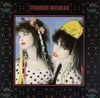
An effortlessly charming synth-twee record that’s both scrappy and assured in its sound. There’s a sort of DIY approach to a lot of these tracks that feels largely indicative of the indie bedroom-pop style that would dominate 30 years from here. Loads of fun
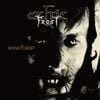
Rising from the ashes of their truly disastrous late 80s-90s period, Celtic Frost come through with not just a comeback, but the band's opus. An entire slough of metal sub-genres, all of which can be described as *heavy*, make up Monotheist's doom-bringing sonic palette. The vocals still manage to be shockingly clear for a record of this intensity, making for a record that may (*may*) just be a stepping stone toward some of metal's historically heaviest sub-genres/sounds
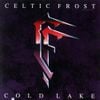
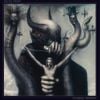
Despite its sinister cover art, To Mega Therion is one of the most accessible early Black Metal records on account of its vocals and instrumentation utilizing a lot of more palatable Thrash elements to great benefit. It would be twenty-one years (and some outright ghoulish left turns along the way) until CF’s opus, but this is still a classic for the first wave of Black Metal, no doubt

A fuller sound than some of Hebden’s other acclaimed works, though the Four Tet identity is still very much in tact. Hebden’s knack for making his beats sound so organic and almost anti-robotic is what really makes Four Tet stand out from the pack if you ask me
A highly diverse electronic record that pulls in a lot of atypical influences for a record of this style. Hebden's Folktronica-laced approach to IDM & Downtempo is opened up quite a bit more compared to the prior Pause, resulting in tracks that still retain their 'hauntedness' while also making for some lovely grooves

Hebden's work under Four Set is known for its tender, almost ghost-like approach to IDM and Electronic music- but on Pause, the theme is 'masterful sparseness'. Hebden doesn't use any instrument or sound that isn't absolutely necessary for what he's going for. That's not to say Pause is a snoozefest- moments like the vocal sample ringing throughout No More Mosquitoes is jarring and far from 'calming'. It's not Four Tet's best, but it lays ... read more

The title track is a blast and in the upper echelon of early 2000s Garage Rock Revival- the rest doesn't even manage to scrape the pantheon steps. The record spends so much time trying to desperately convince you of its 'style' and spunk, though more often than not it all feels like a facade. It's all pleasant to the ears, but compared to their contemporaries? A Revival sound that feels remarkably flat

By leaps and bounds Roxy Music's finest. Sophisti-Pop just fits like such a perfect glove for the group's Art Pop sensibilities. One of the best produced pop records of the early 80s, with some seriously catchy melodies abound to boot. Gorgeously lush
Roxy Music's prog-glam swirl is certainly easy to enjoy, if for its panache alone- though I never really felt 'wowed' as I expected to be going in
Deserves credit for being one of Brian Eno’s first major ventures and for establishing Roxy’s sound from the go. That said- both pros which would be sharpened significantly moving forward
The record that reminds you that Max Roach was a *percussionist*, damnit! Six songs of spiritual reckoning all chained together by Roach's genuinely stellar drumming. A sort of foretelling of the spiritual jazz that would, in many ways, come to rule the Jazz of the decade moving forward
A lot of almost Mingus-like textures going on here- unkempt like We Insist!, even featuring Lincoln on one track, while devoting more attention toward some more out-there textures
A raised fist, followed by a million echoes. Roach taps into so many of the core essences of not only jazz, but the very ethos of his time with absolutely breathtaking determinedness. Abbey Lincoln's vocals are the driving force between this record's political machinations, blitzing through the phenomenal jazz compositions like an arrow through the eye of a hurricane. One of the most poignant and important jazz records of the 60s
Create an account to rate and review albums.
Recent Review Comments
On Jalen Ngonda - Doctrine of Love
"@Shayden 100% agree, it’s a throwback record done right"
On 2Pac - Me Against The World
"@Cloudboy019 yeah I def get what you mean. Pac’s cadence and energy is so infectious for me I was able to look past the production being relatively ‘one-note’, even though like you said it is excellent production. That’s an excellent analogy"
On 2Pac - Me Against The World
"@Cloudboy019 that's a fair critique, I will say flow is not Pac's strongsuit, though a lot of people would probably disagree with that. The production is pretty much perfect here imo but it is definitely uniform across the record so I could see it growing stale if G-Funk adjacent stuff isn't as much your bag"
On David Bowie - David Bowie [Space Oddity]
"@usur_disc350 I’ll admit I’ve not revisited this much at all in the last couple years, but I’ll definitely stand by it having several great cuts beyond the title track"
On usur_disc350's review of McKinley Dixon - Magic, Alive!
"Honestly, really well put. I still have this rated pretty highly but I'd say I feel similarly, there's a sheen over this style of 'indie rap' that's starting to feel like the sheen that's covered a large bulk of indie rock the past decade (post-Mac if you will), it's a sheen of homogenization. Hadn't really put much thought to it until now but I think this absolutely hits the nail on the head, and is probably why despite there being so much 'good' hip-hop nowadays, the bulk of it feels like one big swirl of sameness. Excellent take"
On susquatch - Water Plant
"@Rileone it is yeah but it’s also definitely math rock too"
On Faith Evans & The Notorious B.I.G. - The King & I
"@TheTrillTrolla that’s actually very informative, thank you!"
On Doofy's review of The The - Infected
"I prefer Soul Mining a shade, but I’ll agree that this record should be considered as far closer in quality than most. Nearly everything that makes Soul Mining so excellent is found here too, excellent production and songwriting especially"
On Clifford Brown & Max Roach - Clifford Brown & Max Roach
"@HomeSession3 holy shit what a story! Thank you for sharing, that certainly sounds like one of those life-defining moments, for you and Roach. Live Jazz may be the definitive form of live performing for the reasons you said- it makes the frail jolt to life"
On My New Band Believe - My New Band Believe
"@Trazyn I hate saying ‘annoying’ bc that’s reductive, there are def moments where the lyricism along with the vocal style felt really contrived and grating to me though. Overall it’s certainly not an ‘annoying’ album, just nothing particularly new for Windmill. I would say I’m annoyed with the windmill scene in general nowadays"
On Tangerine Dream - Rubycon
"@Litebill931 thank you much! I have to stop myself from over-writing a lot of the time lol"
On 𝒩𝑒𝓋𝑒𝓇𝓂𝑒𝒶𝓃𝓉's review of Slayyyter - WOR$T GIRL IN AMERICA
"First review of this project that’s really made me want to check it out- seriously excellent write-up"
On XTC - Drums and Wires
"@sher12308 you’re totally right! Major goof on my part, I’ll edit that, appreciate the call-out"
On King Krule - 6 Feet Beneath the Moon
"@yusukeYYH thank you so much! His music is this really intriguing blend of abstract and extremely vivid"
On Weezer - Weezer (Blue Album)
"@ScaredDog6163 yeah for sure! I appreciate the compliment! Jeff Buckley is a perfect example of why 90s rock really shouldn’t be funneled into those two ‘categories’ I listed because he blends so many styles and sounds (a major reason why Grace is one of the most majestic albums of all time). I’m the same as you in that there’s very little I truly dislike that I listen to- it makes it a lot easier to be encouraged to check out more stuff! Let me know when you’ve got those reviews typed out, I’d love to check em out!"
On Weezer - Weezer (Blue Album)
"Sorry for the long winded answer, hope that helps! If you need help finding some specific bands lmk too and I can try and throw you some based on what you currently rock with 🤘"
On Weezer - Weezer (Blue Album)
"The other main strain in my mind is Slacker Rock (the kind I tend to prefer a bit). This is your Pavements, Built to Spills, Weezers, etc. This style of rock tended to ‘look forward’ whereas grunge took influence from a lot of its contemporaries in many ways.
In terms of what I’d do for a deep dive now- honestly, I’d determine which strain you like more and start with the big bands before digging deeper, maybe even trying out some of the influences/ similar bands. For instance, if you really fw Weezer I’d recommend other Geek/Wacky Rock bands like Cake or Grandaddy. Same goes for, say, AIC- you could check out other alternative metal bands for instance."
On Weezer - Weezer (Blue Album)
"@ScaredDog6163 for sure! I went on a pretty big 90s rock binge a couple years back and it’s definitely a vast canyon. This is a wildly simplified answer, but imo there are two *main* streams of 90s rock. The first is what most people think of , being Grunge. These are your Nirvanas and Pearl Jams and basically what the average person will probably think of when they think of ‘90s rock’- and it’s great! Grunge pulls a lot from heavier influences depending on the band, such as Punk and Noise Rock for Nirvana or even Metal with bands like Alice In Chains."
On The Radio Dept. - Clinging to a Scheme
"@Zubb autism + long commutes to work goes a long way lmao"
On Silk Sonic - An Evening With Silk Sonic
"@Iam_AKne thank you so much! It’s become something of a passion of mine for sure. The kind words go a long way, I’d love to have my own site or something one day"
On Silk Sonic - An Evening With Silk Sonic
"@Iam_AKne no I’m not, it’s funny you ask because in high school I had plans to maybe become a writer but it never panned out"
On Johnny Blue Skies - Mutiny After Midnight
"Unless you find a rip somewhere or dish out thirty bucks it’s impossible for the time being unfortunately, it is an absolute blast of a record though no doubt, one of his best easily"
On Silk Sonic - An Evening With Silk Sonic
"@Iam_AKne thank you much! I have fun with them lol"
On Frank Zappa - Joe's Garage Acts II & III
"@ScottShelby that does look interesting, I’ll try and get to it later today, thanks again for all the recs! You’re the Zappa guy so it’s been helpful as a total Zappa novice"
On Frank Zappa - Joe's Garage Acts II & III
"@ScottShelby honestly, having sampled a handful of tracks from his studio records to follow from here I think I’m going to bow out for the time being on his discography, I’d prefer to end it on a high note. Someday I’ll eventually go the whole distance but I think I’d honestly just get burned out going through a series of just messy subpar records tbh"
Advertisement