

Nobody’s Smiling is another No I.D. full produced album. The album’s tone is dark and introspective, but parts of the project come across as inconsistent. The production by No I.D., with his signature style, lacks standout and memorable moments. It is monotonous at times, especially in the middle of the album, which makes it less enjoyable. Jhené Aiko and Vince Staples provide some of the most refreshing moments on the record. Standout tracks such as “Rewind That” ... read more

Entirely produced by No I.D., the same producer behind Common’s early work, The Dreamer / The Believer represents a strong comeback after Universal Mind Control, which was widely seen as a misstep. On this album, Common returns to his roots. The album’s thematic core revolves around resilience, spiritual awareness, and personal growth. Common opts for a restrained and consistent approach. No I.D. 's production characterized by warm samples, understated drums, and heavy use of ... read more

The 8th studio album by Common, Universal Mind Control, moves away from its predecessor’s soulful and jazz-influenced beats and shifts toward an experimental, futuristic sound that mixes electronic elements. The production, largely handled by The Neptunes, creates a style that feels more party-oriented and sexually themed on several songs. Most of the beats do not fully fit or connect with Common’s traditional style.
Stand out tracks:
Universal Mind Control (UMC)
The title track ... read more
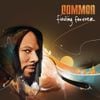
Released in 2007, Finding Forever, the seventh studio album by Common, serves as a artistic continuation of his critically acclaimed 2005 project Be. The album debuted at No. 1 on the Billboard 200, marking the first and still only no. 1 album of his career. Kanye West once again plays a central role in the production identity of the project, reinforcing the soulful and accessible sound that revitalized Common’s mainstream presence.
Rather than pursuing the experimental direction he ... read more
Released in 2005, Be showcases Common at his best, combining introspective lyricism with soulful, minimalist production primarily handled by Kanye. After the experimental album of Electric Circus in 2002, Common needed a comeback and Kanye West is the main producer with 2 tracks produced by J dilla. The album has social commentary, and personal reflection, marking a high point in Common’s discography.
The album opens with Be (Intro), featuring a bassline and expressive keyboard work. ... read more
Nas’s verses save the album. Many of these songs would be better with production that matches the level of the lyricism. When I compare these beats to the Hit-Boy hexalogy, the production here feels outdated, which only shows that Premier has been past his prime for years. I probably won’t go back to this album, but it does have a few highlights like Bouquet (To the Ladies), Sons, and Writers. The beat on NY State of Mind 3 is so bad that it doesn’t deserve the title at all, ... read more
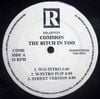
Pete Rock’s production style combined with Common’s lyrics makes this one of my favorite diss tracks. It reveals another side of Common, while Resurrection was more introspective and conscious, here he’s aggressive and exposes Ice Cube’s hypocrisy. Common destroyed Cube on this track
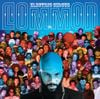
Almost three years after Like Water for Chocolate, Common released his most experimental album. It shares some of the soulful DNA of Like Water for Chocolate, but blends hip hop with rock, electronic, funk, and psychedelic influences. The result is ambitious, but also Inconsistent.
Soul Power: A track rooted in Black pride and unity. The beat is experimental, and the hook adds to its anthemic energy.
Aquarius: The best song on the album. Built around a hypnotic, cosmic beat, it captures ... read more

After the introspective themes of One Day It'll All Make Sense, Common continues down a conscious path on Like Water for Chocolate. Backed by the Soulquarians collective, he crafts an album rooted in live instrumentation, spirituality, and Black cultural pride. It's an ambitious work with deep, poetic, and texture.
This is an album that is better if you listen to it from start to finish. The sequencing, the warm production, and the organic feel all make it more of a journey than a ... read more

Common released what would be his first album under the name Common, following his name change from Common Sense. A more mature Common explores deeply personal themes on One Day It'll All Make Sense, touching on abortion, life struggles, poverty, and fatherhood. No I.D. delivers amazing production throughout the album, soulful and consistent. Common’s lyricism is more refined than before, though the album’s overall quality feels a bit more inconsistent compared to his previous ... read more
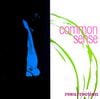
Common proved why he was called the “Chi-Town Nas” in 1994. Resurrection was his last album under the name “Common Sense” before a legal dispute forced him to shorten it to Common. It’s a massive upgrade from his debut Can I Borrow a Dollar?, more mature, focused, and lyrically rich. This is the album where Common found his voice and style, establishing himself as a MC. While his first album didn’t make much noise, Resurrection was a rebirth turning him into ... read more
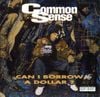
Coming out of Chicago, Common brought energy, rapping over jazzy, East Coast influenced beats that complemented his animated delivery. The production, handled mostly by No I.D. (then known as Immenslope), leans heavily into jazz rap with funky basslines and dusty drums. While the beats fit Common’s style, the album lacks standout highlights overall. Common’s start in rap was deeply rooted in the boom bap underground scene, and Can I Borrow a Dollar? captures that raw energy. The ... read more

This project feels more like a mixtape than an album. It’s short, lacks major features, and is overall a mixed bag. Redman’s lyricism is still good, but the production doesn’t quite match his energy. That said, it’s a definite improvement over the Reggie album. It doesn't contain anything as bad as the weakest tracks on that project. While Mudface doesn’t offer many memorable songs, it’s not terrible either. Just very mid. My favorite tracks are ... read more

The intro starts off solid, but the use of autotune in the final section foreshadows the disappointing direction the rest of the album takes. The production throughout is arguably the weakest of Redman's entire discography. Many of the hooks are poorly executed and almost unlistenable, songs like Full Nelson, in particular, stands out as a low point, with an awful chorus that is unlistenable. The autotune is overused and ruins several songs. Tracks 2 through 5 are some of the worst songs ... read more
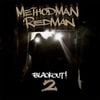
This album is a significant step up from Red Gone Wild. Ten years after the first Blackout release, both Method Man and Redman are past their prime, but they still manage to deliver a solid album. Dis Iz 4 All My Smokers is my favorite track; it captures their classic vibe perfectly. Meth and Red still have great chemistry, but unfortunately, the album lacks standout highs. It's inconsistent overall, having so many skips. Songs like Four Minutes to Lock Down featuring Rae and Ghostface are ... read more

After six years without releasing an album, Red Gone Wild brings a sense of nostalgia reminiscent of Redman's earlier work. While it's an improvement over Malpractice, the difference isn’t big, they're on a similar level. The production here is stronger, from notable names like Pete Rock, Timbaland, Scott Storch, and DJ Clark Kent, which gives the album a more refined sound. However, it still suffers from the same issue as Malpractice, it's too long and overloaded with ... read more
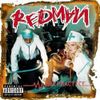
There are so many issues with this album. The long skits are annoying and lack the originality of Redman's earlier work. Skits that run for three minutes feel boring and disrupt the album’s flow. At this point, Redman is becoming repetitive, Malpractice is like a weaker version of Doc's da Name 2000. While his lyrics remain solid, the production is uninspired. The album also runs longer than necessary, and has too many filler tracks. “Let’s Get Dirty (I Can’t ... read more
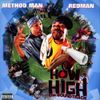
From the stoner comedy How High, the soundtrack offers more radio friendly songs from the duo. However, about half of the album consists of previously released tracks, leaving only a few original songs. The best tracks are “Part II,” “Let’s Do It,” and “Cisco Kid.” Overall, it feels like an extension of Blackout!, but it's far inferior in quality.
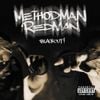
Overall, Blackout! is a fun, well produced album filled with personality, charisma, and lyricism. A solid collaboration, Method Man and Redman have undeniable chemistry and complement each other effectively. The album is consistently entertaining and funny, with both MCs bringing their signature styles. They complement each other naturally, with back and forth flows. Redman often delivers the stronger verses, but Method Man provides a perfect balance, making their dynamic engaging and ... read more

A downgrade from his previous three album run. The main issue here is the production, which feels less interesting. Redman is still lyrical and entertaining, and while this is a good album, it doesn't compare to the quality of his earlier work. Too many skits and the album’s excessive length make it less enjoyable. Some tracks feel repetitive and more like filler, there are more fillers here than in his previous three albums combined. Soopaman Lova 4 is the weakest song in the ... read more
Create an account to rate and review albums.
Recent Review Comments
On Jakandjoe's review of Ice Cube - Man Down
"@TVenomoth Cube's first three albums > Carti's whole catalog"
Advertisement