

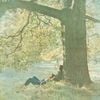
John Lennon's first post-Beatles work is an incredible rock experience. Being the result of Lennon's primal scream therapy, the album reflects its composer's long-standing personal concerns. In "Mother", the albums' opening and best song, Lennon addresses both his parents who abandoned him in his childhood, with his mother eventually dying in a car accident when he was 18 years old. Perhaps the most emotional and touching song Lennon has ever written. This theme is reprised in the ... read more
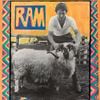
It's beyond me how badly this album was received by music critics at the time. The same critics who hated McCartney's first solo album, saw no improvement in Ram. In my opinion, it's a huge upgrade, both musically and lyrically, with many songs being reminiscent of Paul's work in his Beatles years. "Too Many People" and "3 Legs" open the album strongly, echoing a psychedelic and country influence; "Uncle Albert/Admiral Halsey" is a great song, a short medley of ... read more

One of the albums that really grew on me as years passed and my taste in music developed. Paul McCartney's first solo work suffers from the timing it was released (before the official break-up of the Beatles) and the inevitable comparisons it drew to his previous ones. It's without a doubt an under-produced album, filled with slow, rather atmospheric compositions - what we would call lo-fi, nowadays. Most of them seem unfinished and tasteless, while the album lacks the energy and artistic ... read more
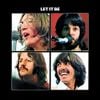
Had you asked me years ago, I would have ranked this album much lower than that. A follow-up to the masterful Abbey Road, it's a collection of some great songs, some musical arrangements resulted by jam sessions, and an evidently immature, rather amateurish production.
However, the album contains some of the most underrated pieces in the Beatles discography. "Two of Us" was written after the most turbulent period of the band's career, where the relationship of its main songwritters, ... read more
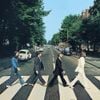
Alright boys, enough with the fighting, enough with the quarrelsome atmosphere, enough with the egotistic approaches. We're going to do one more, and it's going to be a good one. One last album. Let's get together and do it, like the old days. That was essentially the mindset behind the last recording sessions of the Beatles' career (the songs for "Let it Be" were recorded earlier that year). The result is nothing short of phenomenal.
Abbey Road is definitely the best 'rock' album ... read more
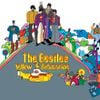
This is not a studio album, but more of a soundtrack album for the Yellow Submarine animated film. Hence, it's unfair to compare it with the rest of the discography, as it's clearly the weakest entry. Yet, it contains four new songs in between the already known "Yellow Submarine" and "All You Need is Love".
George Harrison's "Only a Northern Song" is easily the most underrated song in the Beatles catalogue, "All Together Now" is a fun children song and ... read more

This is by far the strangest and craziest of all Beatles albums; I'd argue that's even more crazy than their psychedelic phase. A double album, four sides, 30 songs, more than 20 genres and sub-genres of music. Amongst all this chaos, you'll find some of the best songs on the Beatles catalogue, and also a few crazy-going nowhere-compositions which you'll never listen to more than once in your life.
Essentially, the White album is the result of the most turbulent period in the band's history, ... read more
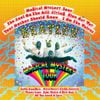
It's indeed a magical mystery tour. Continuing their psychedelic phase, the Beatles released a double EP which consisted of left-overs from the Sgt. Pepper's sessions, as well as two singles that came out before their magnum opus. Second only to Sgt. Pepper's, this album is arguably their best work in terms of atmosphere. Psychedelia runs through the entire record; whether it's in the two acid-inspired hallucinating classics, "Blue Jay Way" and "I Am the Walrus", the ... read more
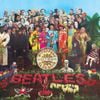
I edited my previous long, never-ending review, where I attempted to explain why this album is so great. It was to no avail for many reasons. There's no point to go on and on about the historical context, the musical and lyrical innovation, and the countless elements that make this album the most impactful and meaningful piece of art in music history. No one will be convinced of the album's greatness just by reading the review of a biased Beatle-maniac.
To keep it short, I firmly believe it is ... read more
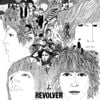
Revolver continues the experimental trend that its predecessor had established. The recent musical discoveries of the four members are present in almost every song of the album. Featuring innovative complex arrangements, it confidently dives into psychedelic rock, a genre that had coloured the Beatles' recent interests, raised by their experience with LSD. The ending track of the record, "Tomorrow Never Knows" is a ground-breaking composition which perfectly reflects the experimental ... read more
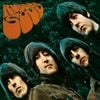
This is the real game-changer in the Beatles discography. It represents the most dramatic shift in the band's sound, as well as its image, making a conscious turn away from the juvenile character the people were used to, and bringing a new threshold of complexity and maturity. Folkier than the previous one, the album features new instruments, higher guitar tones and complex arrangements. We find George Harrison playing the sitar in "Norwegian Wood", John Lennon playing the harmonium ... read more
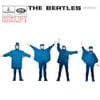
This album displays significant maturity both in terms of music and lyrics, again containing fusions of musical genres. Lennon's "You've Got to Hide Your Love Away" and "It's Only Love" indicate Bob Dylan’s folk rock sound, while McCartney's "Another Girl" and "I've Just Seen a Face" echoe a strong country influence. "Help!"(along with its B-side single "I'm Down") is a classic rock n' roll piece with some folk touches, and ... read more
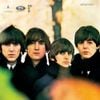
By the time the Beatles recorded their fourth studio album, they had completed a monthly tour of Europe, Asia, Australia, and most importantly North America. Their meeting with folk rock icon Bob Dylan (as well as their introduction to marijuana) proved to be pivotal for their next steps, as the record heavily relies on the folk and country influences they picked up on the road.
Lennon's "No Reply" and McCartney's ballad "I'll Follow the Sun" are great examples of this; ... read more
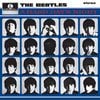
This is by far the most well-written and most impactful album of the band's early years. With thirteen original Lennon-McCartney compositions, drawing from classic rock n' roll, to soft rock, folk rock and pop sounds , it makes the strongest statement for their nuanced songwritting.
"A Hard Day's Night" and "Can't Buy Me Love" are the album's undisputed hits, "If I Fell" and "And I Love Her" are two fantastic ballads which employ a slower rhythm, fuzed ... read more
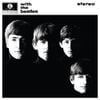
Continuing with their succesfull pre-tested formula, the fab four's second studio album constitutes of 8 original songs and 6 covers. "It Won't Be Long" makes a strong entry statement of what's about to follow, McCartney's legendary love anthem "All My Loving" is the strongest song of the album, while we get to see George Harrison's first songwritting contribution with the catchy "Don't Bother Me", as well as his iconic cover of Chuck Berry's "Roll Over ... read more
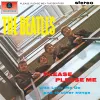
The first full-length album of the world's greatest band was nothing short of amazing. The record features 8 original compositions and 6 covers of rock n' roll classics. We're introduced to the Lennon-McCartney partnership - yet to reach its full potential, but still able to display their songwritting abilities in a high level - giving us some of the catchiest rock n' roll hits of the decade, while also showcasing the band's early influences. The covers are not performed merely following the ... read more
Create an account to rate and review albums.
Recent Review Comments
No review comments
Advertisement