

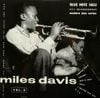
Vol. 2 is what I would call Miles Davis' first success. Up to this point, he wasn't exactly the most exciting artist in the jazz genre, pretty much going solely with all the usual tropes and rarely ever straying too much from the usual bebop style, and while Vol. 2 is still very conventional and nothing too great, it does prove that the musicianship of Miles and the other musicians are really good. This is the album where Miles starts to become himself. It may be a while before he would get ... read more
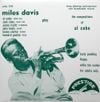
You should know what you're getting by now. Miles' fourth release, and the final of this odd trilogy, and it's just as okay as its predecessors.
Up to this point, I've enjoyed all of these early albums from Davis. Both parts in whatever this trilogy was supposed to be were at the very least entertaining, well-written, composed, and performed. And I guess at the end of the day The Compositions Of Al Cohn is no different, but the samey sound, this sound that you've heard all throughout each of ... read more
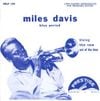
Blue Period, the third release from Miles Davis, is, as you would probably expect, is very similar to his debut, The New Sounds. And honestly, this should come as no surprise to anybody. Even if you were to completely ignore the fact that the album covers are exactly the same barring the colour and the text, the fact that two out of three of the songs here were recorded during the same sessions as The New Sounds should tell you everything you need to know. And when the third track actually ... read more
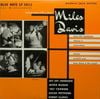
Miles Davis' second album is pretty much more of the same conventional bebop jazz. Although it isn't quite as generic, and I'm sure that if you listened to this after the trilogy of albums that have the exact same cover art and the exact same sound (The New Sounds, Blue Period, Compositions Of Al Cohn) that you would see this as more of a change of sound than it actually is. The thing is, Young Man With A Horn isn't bad in the slightest. By jazz standards, I'm sure this is pretty good, although ... read more
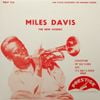
The first official studio release from Miles Davis, and it's actually surprisingly enjoyable, albeit very forgettable and generic.
Back in 1951, you probably wouldn't have heard much from Davis yet. He had collaborated with a few much bigger artists, sure, but at this point he hadn't had an album of his own out yet. Although Birth Of The Cool would have made for a much, MUCH better debut and would have had a much bigger kickstart to his career, he instead went with a more conventional bebop ... read more
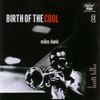
The Birth Of The Cool is the birth of two things: cool jazz, and the legendary career of Miles Davis.
This compilation may have been released after many other releases from the man himself, but this is essentially his debut. With it being released a full seven years after recording for it ended, you would be surprised of the amount of people who often forget that this is the album that started it all just because 20+ albums beforehand, even though it is seen as one of his earliest classics. ... read more
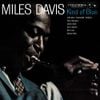
Jazz. To me, this has always been one of the most difficult genres to get into. It has always been that one genre I hear in public and in soundtracks and it has always sounded so samey that I never thought I'd actually be able to truly appreciate it. But for the past few months I have been trying to get into the genre as best I can. I've been listening to some of the most acclaimed albums in the genre, constantly returning to them in order to try and understand and enjoy the genre a bit more. I ... read more
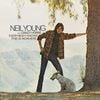
If you know me, then you know there's two things that I always love to see in a rock album: quality songwriting and excellent guitar work. When it comes to singer-songwriters in particular, you're very unlikely to get the latter. However, in Neil Young's first album with long-time backing band Crazy Horse he proves that singer-songwriters don't need to stick to a simple, laid-back sound with all of the focus on the lyrics. He understands that instrumentation is just as important as meaningful ... read more

What are you guys talking about? This album is fuckin' brilliant!
Neil Young's self-titled debut album is unfortunately overlooked by most Young fans, as well as fans of folk in general. This shouldn't come as a surprise to anyone, seeing as every single album he would go on to release from 1969 to 1979 would end up becoming absolute classics that would stand the test of time and become some of the most beloved albums of all time. Of course anything he did beforehand would not be remembered ... read more
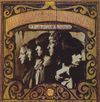
Despite the clear lack of motivation and ideas, Buffalo Springfield release their final album to fulfill contractual obligations, and the result is... passable, to say the least.
I'm not going to lie and tell you that Last Time Around is a bad album like I'm sure a lot of others would tell, because it really isn't. Is it really weak by Buffalo Springfield standards? Yes. Is it especially disappointing when you take into account that two of the best songwriters in folk are involved in the ... read more
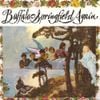
With their sophomore project, Again, each member of Buffalo Springfield find their own sound, and it becomes clear that each of them needs to go their own way in order to actually get anywhere. But that doesn't mean that the album isn't worth listening to, because the content each of them provide their own songs which stand as some incredible psychedelic/folk/country tunes.
Where their self-titled debut was more amateurish and only had a handful of highlights, Again shows mature songwriting, ... read more
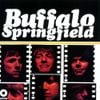
Who said country rock wasn't good? On Buffalo Springfield's self-titled debut, you get two singer-songwriter legends, Stephen Stills and Neil Young, constantly outclassing each other, making a ton of stunningly beautiful examples of what can happen if you merge country, folk and psychedelic really well. You also get a few examples of what happens if it isn't done well.
First thing I should get out of the way is what version of the album I'm actually reviewing, because there are actually three ... read more
Gibbs returns once again to gift us with yet another bangin' album, and he succeeds in showing us yet again why he is one of the best rappers of the past few years.
Much like his collaborations with Madlib, this album shows a perfect chemistry between the two, with Gibbs' near-flawless performances going together so well with The Alchemist's orgasmic production. And honestly, as much as I love Gibbs, the production is definitely the main focus of this album. Gibbs' lyrics and flows may ... read more
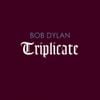
Bob opens up the Great American Songbook one last time and closes off his Sinatra trilogy with the best but also most bloated entry in the triad.
It's honestly really ironic how this is the only album of the three that's actually worth a listen. Both Shadows In The Night and Fallen Angels are so damn boring that they just aren't worth the listen, and Triplicate actually has a number of covers that I'd actually argue are worth listening to. But then you realize that the album itself is 90 ... read more
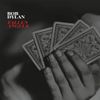
Dylan brings out the Great American Songbook once more, covering more classic songs that have been recorded by Frank Sinatra, making the second album in his Sinatra trilogy. And it ends up being pretty much exactly the same in terms of sound and quality.
If you've heard Shadows In The Night, you've heard Fallen Angels. There is absolutely no difference between the two outside of the chosen tracks. They're both tiresome, slow, and really unimportant in the grand scheme of things. While there's ... read more
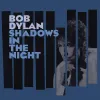
Dylan's Sinatra trilogy begins, and it sets the standard of what to expect of the remaining albums in the trilogy.
Bob pulls out the Great American Songbook and covers a bunch of classics popularized by Frank Sinatra. If you thought that that sounds like a bad idea on paper, then you can only imagine how the album actually sounds. Already just that idea alone brings up many notable issues. Firstly, how the hell does Bob Dylan of all people expect to cover songs that Frank Sinatra of all people ... read more
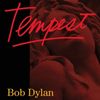
Dylan kicks off his 2010s releases by showing that even after a brief decline in quality he is still capable of consistently pumping out albums of a similar quality to his 2000s releases. The result is an album that may not be his best but is certainly a good one.
By this point in Dylan's discography, I think a lot of his fans have grown tired from this blues phase he has been going through. The past few albums in particular - namely Modern Times and Together Through Life - proved to be some ... read more

Eh, I'm not surprised. I got exactly what I expected I would get: an extremely bloated mixed-bag which vaguely resembles something that could have been a really good 40 minute album.
I should probably get one thing out of the way first, and that's that I've never really cared for The 1975. I've never disliked them too much, but I've also never really liked their music either (ignore my outdated rating for A Brief Inquiry). They've always been a band who, I've felt, made a few good songs, a few ... read more
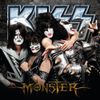
I'm going to put as much effort into this review as KISS put into their album.
Monster shows KISS doing absolutely nothing new, making a Sonic Boom Part 2, only this time it's somehow even less interesting, enjoyable, and memorable. I mean, thank fuck this is likely going to be their last studio album, but still, you would think that a band as popular as KISS would have a closing album where they at least try. This whole album sounds far too forced, out-of-touch, and like they put no effort in ... read more
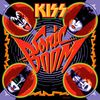
After an eleven year break, KISS come back once more to continue to try and gain some sort of relevance. This time, though, they actually somewhat succeed, making an album that's very reminiscent of their '70s output and is arguably their best release since 1982's Creatures Of The Night.
Sonic Boom may not be their most enjoyable, memorable, or even impactful release, but it surprisingly does have a lot going for it (at least when taking into account the majority of KISS's discography). The ... read more
Create an account to rate and review albums.
Recent Review Comments
On Doja Cat - Demons
"Damn, forgot about this certified banger of a review.
Demons is still my pick for best Dostoevsky btw"
On Boris - Performing "PINK" in Its Entirety - Live at Shindaita Fever 20160924
"@DevGPluto I heard. It really is the best time to be a Boris fan"
On Boris - Performing "PINK" in Its Entirety - Live at Shindaita Fever 20160924
"@roundcircle unlikely to happen unfortunately. there's just too many recced songs for me to sift through at this point"
On Les Rallizes Dénudés - Wilderness of false flowers_1976
"@Eomann it is a certified banger for sure"
On Meat Loaf - Bat Out of Hell
"@FeendishlyJam I believe I meant that Meat Loaf is grating and that people who dislike Queen generally make the argument that Freddie is grating"
On System of a Down - Hypnotize
"@ClayDJs03 "hate" was waaay too strong a word for me to have used back then. Honestly quite surprised I did lol. The only SOAD song I ever really "hated" was Old School Hollywood. But anyway, as far as some of the tracks I used to dislike, I guess I sorta just lightened up. She's Like Heroin is still probably bottom 5 SOAD, and Kill Rock 'n Roll is a bop even if it's silly. The others I listed as least favs I honestly don't really know why I did. Two of them are some of the most memorable on the album, and Stealing Society, though one of the most forgettable in their discog, is a banger.
The album itself is still my least fav SOAD. Too many tracks that are just blatantly forgettable or simply filler, and it's such a drop from Mezmerize."
On Whitehouse - Quality Time.
"@EpicenterofCool yeah, they added my reviews to their bandcamp albums a few years ago. It was really cool of them"
On Seatbelts - Cowboy Bebop
"@BMS unfortunately Samurai Champloo is one of the classic anime I haven't yet seen, but I hope it's as good as I've heard"
On Ramin Djawadi - House of the Dragon: Season 2
"And Helaena being a dreamer was one of the worst decisions in this show so far lol. It's blatantly them making an "out" so they can do whatever with her character and have it make sense, i.e. her not grieving her son, and eventually killing herself, "because I saw it in a dream.""
On Ramin Djawadi - House of the Dragon: Season 2
"@ClayDJs03 I think (unfortunately) you hit the nail on the head with the writers wanting to double down on the misogyny, which is a shame considering George generally does a great job of tackling the subject in his books, even in the Dance of Dragons. All this whitewashing has ironically done the opposite of their intention; removing the agency of literal Queens, having the men in their lives make the hard decisions that come with war and having the women fight against it and act like they had no say in the matter, to me, that's way more misogynistic than, y'know, having your women characters actually make impulsive, emotional, even catastrophic decisions. Rhaenyra especially is so pathetic this season after that final shot in S1."
On Ramin Djawadi - House of the Dragon: Season 2
"And yeah, that was the very moment in the finale I noped out lmao. Them meeting not once, but TWICE is such a tumblr fanfic moment that I can't believe made it past LITERAL PROFESSIONAL SCREENWRITERS. "Yeah, just have disputing Queens sail across the sea during wartime, not face any troubles along the way, and safely face their adversary and make their way back home in the span of a single day. That makes perfect sense." And Alicent selling out her son... Jesus fuck, idk how they managed to butcher such incredible characters in such a short time. They did NOT care and it shows."
On Ramin Djawadi - House of the Dragon: Season 2
"@ClayDJs03 Yeah, liking it as a book fan is sheer lunacy lmao. Of course the brutality is toned down, but also distancing Rhaenyra's participation. It gets hard to view her as the grief-stricken mother and LITERAL QUEEN that she's supposed to be when the impulsive decisions that make her so compelling in the books are trivialized down to "actually it was the men in her life who made those decisions. She's rational actually." And like you mention, the horrors inflicted on Helaena are so minimalized, but then after the fact they don't even give her a storyline dealing with the grief. I legitimately believe B&C was handled awfully, not just the event itself, but the entire lead-up and stream of consequences afterwards no longer making sense."
On Ramin Djawadi - House of the Dragon: Season 2
"@ClayDJs03 That blog was so vindicating, the contents and HBO's response so bemusing. Helaena killing herself for the lols will certainly be a choice. (I was also so glad he spent the whole post trashing Blood & Cheese. I felt crazy, being the only person I know (even fellow book fans) legitimately thinking that was executed well and not a bastardization on the level of GOT's S5 and 6 portrayal of Dorne and the Iron Islands.)"
On Andrei's review of Rage Against the Machine - Rage Against the Machine
"it's moments like these that make me wonder if Andrei has ever drank Powerade Zero"
On XXXTENTACION - Bad Vibes Forever
"@Archerycraft18 i don't really have any sort of justification. a 0.5/10 is still a 0 to me"
On Eomann's review of Les Rallizes Dénudés - Double Heads: Legendary Live Yaneura Shibuya, Tokyo 1980-1981
"Beautiful review! A banger of a write-up for a banger of a record"
On Dead Kennedys - Bedtime for Democracy
"@molochthagod lol. lmao even."
On XXXTENTACION - The Fall
"@zzile "point out that its your opinion" - you're on a music reviewing site. Any takes had pertaining music is implied to be the opinion of the take haver. If you need every single criticism to be prefaced with "this is just MY opinion," that says more about your insecurity of your own takes than it does the reviewer.
"state what you consider the obvious, get likes and peace out" - fat load of good that did me. 4 likes in 5 years!
"your ass knows nothing about the way i review albums" - the irony. Let me point out once more; this is a 5 year old review you're seething on. If you wanna give constructive criticism, at least look at what else the reviewer has posted since (never mind the fact you should learn to be a bit more respectful)"
On XXXTENTACION - The Fall
"@zzile I know next to nothing about X the person, all I know is he made dogshit music. This is one of the most straightforward reviews I've ever written, and I still get Mr. Armchair Psychoanalyst out here trying to find some deep rooted bias I have to explain why I dislike the album"
On XXXTENTACION - The Fall
"@zzile bro's seething over a 5 year old review"
On 파란노을 [Parannoul] - After the Night
"@Eomann bro needs to get on those Swans lives and Dark Magus ASAP"
On Eminem - Music to Be Murdered By
"every time i get a comment on this review, i'm reminded by how sensitive the average nemnem fan is"
On Opeth - Blackwater Park
"@ScottShelby I return to Still Life more often nowadays so there's that; Death's later albums are a no brainer, some of my fav metal records of all time; I'm also a sucker for Atheist's Unquestionable Presence. I've been slacking on metal a lot recently tho, so there's prob a few more that just haven't sprung to mind atm."
On Green Day - American Idiot
"oooooooh, I see. It completely flew over my head that this is a concept album. This changes everything! So THAT'S why half the songs are mediocre! OK, now I can enjoy these outstanding concept album lyrics!
She's an extraordinary girl in an ordinary world ♫"
Advertisement