

Assembled here on this raucous 1983 recording, one can find a cream-of-the-crop assortment of the best of the noisier free-improvisers. Peter Kowald is here equipped with bass in hand, as well as the trumpeter Toshinoro Kondo and cellist Tristan Honsinger. If you were to compare auditory abstract expressionism to its visual counterpart, one could say that while Coltrane and his followers share a resemblance to the practical chaotic purity of pollock, the European free-jazzmen and Borbetomagus ... read more
If you are into comparisons, I would much rather take Cerha’s Spiegel over Ligeti’s Atmosphéres both written around the same time. Maybe it’s my companionship to the Second Viennese school sound that Cerha seems to channel here that i favor so much, but more than that it’s a delightfully enticing progression of the serialist method that Atmosphéres all but abandons in place for new modality. Follow Webern end up with Cerha.

Erstwhile 2021: At a Glance
When Pierre Schaeffer set about crafting his own Musique Concrete in France back in the 1960s, he had one goal in mind: to fashion sound so that it in no way resembled its popular form, " I said to myself, 'Maybe I can find something different... maybe salvation, liberation, is possible.' Understanding music to have the potential to be something more than organized and 'approved' sounds leads to a more pure view of the world around us, and with this idealogy, ... read more

Here on this 75' live outing between Evan Parker and Derek Bailey, the two musicians responsible for writing sonic curriculums that redefined their respective instruments can be witnessed engaging in a peculiarly unique fashion. To borrow what Peter Brötzmann once said in an interview upon asked about what sort of confrontation occurs when improvising, Brötzmann stated that the meeting is typically an effort to either 'fit' or 'fight'. This definition gives a whole new confirmed ... read more
More an admirer of the Darmstadt school (the creative wheelhouse responsible for producing such iconic composers as Stockhausen, Brown, Berio, Boulez, and Nono), then an actual participant, André Boucourechliev all the same, pioneered in a similar vein the practices of that renowned school. As to which composer he individually gravitated in style towards, Boucourechliev began to follow in the steps of indeterminacy of Cage while still maintaining a passion for the methods of serialism, ... read more
If I were to spend the rest of my days with the works of one Second Viennese school composer, it would have to be that of Alban Berg. In one oeuvre spanning several decades tragically cut short on account of a bug bite, Berg masterfully progressed and expanded the limits of the opera (the first to do so since Wagner) with the enormously popular Wozzeck and its successor Lulu. As well as the innovation and secrets of infidelity laced within his Lyric Suite. The importance of Berg's work is found ... read more
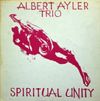
A very compelling iteration of the free jazz idiom is found in Albert Ayler's Spiritual Unity. The work became the defining moment of the young tenor man's ascendancy to jazz stardom as a new voice heralding the unusual jazz offshoot known as free jazz. The sub-genre that was so controversially concerned with expanding the frontiers and testing sonic limits of tried-and-true hard-bop facilities. The term "free" doesn't seem to be a word boasting a universal definition that all free ... read more
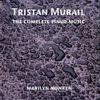
We have previously talked about the spectral viola (Intimate Rituals, the viola works by Radulescu), whose high-register wretches and screeches sear the eardrums. Still, we haven't discussed the spectral piano, an unlikely compatriot of the spectralist mode, whose keys resonate in the most glacial and chilling manner. Mind you; this isn’t to be compared with the asymmetric pattern presentation of Feldman, whose compositions gnaw at music's intellectual potential through minute and nearly ... read more
More fantastical than the formulaic rigors of serialism and less refined than the mathematical exactitude of stochastic music, Spectralism, one of the many musical isms to have been birthed out of the revival for modern music during the latter half of the 20th century, hovers eerily above all of its musical relatives. No less characterized by precise composition methods than the aforementioned styles of modern music, I first believed the meaning of the form Spectralism to relate to something ... read more
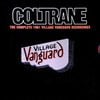
To some, the contents of this exhaustive compilation are simply an addendum derived from Coltrane's main Impulse studio releases. Still, to the devout follower of Coltrane's work, these are sacred messages orchestrated by the spiritual jazz prophet delivered on occasion at the very temple of jazz consecration: The Village Vanguard. The framework of the songs presented on Coltrane's studio albums is something everyone is familiar with; however, on this compilation, they appear as mere skeletons ... read more
If it wasn't for those darned sine waves!
The bane for most newbies to Onkyo is the sine wave, whether it reminds you of trigonometry in high-school or simply because they can potentially give you a case of tinnitus when heard audibly. I tend to be increasingly fascinated with the sine wave, for one, because I enjoy studying them due to my love for physics, but also because I enjoy hearing variations of them. The reason sine waves are so unbearably high-pitched and sharp is a result of how ... read more
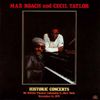
Without any preconceptions, two titans from two different corners of the jazz world came together for a plate-shifting meeting in 1979. Cecil Taylor the most harrowing of the Avant-Garde pianists, and Max Roach, the towering rhythmic clairvoyant of the Hard-Bop/Post-bop idiom. Not only had the two before this meeting ever played with the other, but the provocative event was a completely improvised performance. These two would face each other head-on in a continual attack to assert their sonic ... read more

I am sitting in a room (sound familiar?)
Two-color blocks separated by a bar of ivory black, alongside music that seems to remove the very essence of its identity.
What is left then, two colors with no relation? Music with no meaning? Can raw colors exist without attaching importance to them, and can music thrive with no instrumentation or vocalization? When does music become noise and color, well, colorless? These thoughts pervade the listener and observer when investigating the curious ... read more
CFCE 87.8 Weekly Genre: Sound Art
...Rather than traveling through this density, David orients the listener in a fixed space, allowing the sounds to come toward the listener as they morph and circle about...
By casting aside traditional melody, harmony, and rhythm, experimental composers are occupied and fascinated with sounds that haven’t been mingled with traditional methods. In doing so, these creative individuals spawned entire genres resulting from the attempt to think outside of ... read more
CFCE 87.8 FM Weekly Genre: Free Jazz
As hard as it is to pin down the free Jazz genre (frankly, I don’t believe it’s intended to be “pinned down”), the infamous style is surprisingly straightforward. A great deal of explanation can be found in John Coltrane’s additions to the genre.
I love free Jazz; it was the gateway that welcomed me into a sonic world of limitless possibilities and unimaginable creativity. A world so extreme that was yet so inviting. Contrary ... read more

Field Recordings are transportive. They take the listener to the most unlikely and mundane of places only to make them wholly unique experiences. Its the result of hearing normal sounds in an unusual way that makes field recordings so particularly cathartic. Some may wonder the appeal behind them going so far as to say that those same sounds can be generated by just stepping outside your front door, but in my eyes (ears), the experience is much more than that. These recordings are, first and ... read more
I had the opportunity to contribute to RecordRoundtable blog/podcast by @MasterCrackfox again and was lucky enough to write an article covering one period within the enormous Miles Davis canon. The Second Great Quintet. I had such a great time writing this and I hope you enjoy it!
Ingenuity and Agitation: Miles Davis and The Second Great Quintet
https://www.recordroundtable.com/featured-articles/ingenuity-and-agitation-miles-davis-and-the-second-great-quintet
Often in comparison to their contemporary counterpart Neurosis, famed sludge-metal outfit Isis was at the forefront of sludgy and atmospheric metal during the early 2000s. Whereas Neurosis's approach came through in a much more confrontational and violent manner, Isis pioneered a more natural approach to their songwriting without dropping any of the genre's signature density. After the band's breakthrough record Celestial, released at the turn of the Millenium the album showcased a thoughtful ... read more

CFCE 87.8 FM Weekly Genre: EAI
Severe Ingenuity
EAI, simply put, is the genre of no limitations; no preconceptions or assumptions, only improvisation conjured up on a moment's notice. What is allowed is what's not allowed. This unique genre intentionally explores sound before it is disputed and ordered, exploring these raw unfamiliar territories in search of a greater understanding of music. While EAI is similar in concept to extreme genres, such as Free Jazz and the exploration of chaos and ... read more
Michael Pisaro works in the details. He is a composer who is obsessed with sonic textures and the silence that surrounds them. He gives much thought to the mere breaking of a twig as he would the orchestration of musical notes. For him, those elements go hand in hand; you can't have music without the base of silence or undetermined noise for which the music can arise. It is a complete view of the range that music can be defined by; boundless opportunities and zero limitations. Mr. Pisaro, ... read more
Create an account to rate and review albums.
Recent Review Comments
On 𝐉𝐞𝐧𝐧𝐲 ✩'s review of Jimmy Giuffre - Trav'lin' Light
"i think you might profit a relisten my friend"
On Russian State Symphonic Cappella - Schnittke: Choir Concerto
"Thank you my friend."
On Task's review of John Coltrane - A Love Supreme
"i sense your perspective will change down the road"
On Evan Parker - Six of One
"@nah_ Thank you, this would be an ideal place to start!"
On Robbie Basho - Visions of the Country
"@nah_ Thanks. I am always finding time to return to his wonderful music."
On Fires Of London / Philip Jones Brass Ensemble / Gunter Hampel Free Jazz Ensemble / William Pearson / Giuseppe Agostini / Stomu Yamash'ta - Henze: Der langwierige Weg in die Wohnung der Natascha Ungeheuer
"Yes indeed, Henze is severely underrated these days."
On Radio Symphonie Orchester Wien / Klangforum Wien / Friedrich Cerha / Michael Gielen - Friedrich Cerha: Komponistenportrait
"You can find it on soulseek"
On SterlingCarter's review of La Chapelle Royale / Philippe Herreweghe - Dumont: Motets Pour La Chapelle Du Roy
"I’d have to part ways with you here Sterling."
On Квартет им. Бородина - Квартеты
"https://youtube.com/playlist?list=PLDToVn9CSIaA3pO4KQdttjloO3PXhLXad&si=mfnmLeS2JNTh1jb5"
On Radio Symphonie Orchester Wien / Klangforum Wien / Friedrich Cerha / Michael Gielen - Friedrich Cerha: Komponistenportrait
"That’s right, ligeti and penderecki both offered remarkable inventions of sonic brilliance. I suppose the reason I favor this cerha work over the aforementioned composers respected works is how he managed to bring the serialist ethos full circle and it was also a great place to retire at that. I don't see any progression of serialism beyond what cerha penned."
On TheGod's review of Daniel Barenboim - Olivier Messiaen: Quatuor pour la Fin du Temps
"What an absolutely delightful read Mathieux! I feel as if you have completely captured the essence of Messiaen’s magnum opus in your words!"
On Pierre Boulez - Complete Webern
"Thank you!"
On Marilyn Nonken - Tristan Murail: The Complete Piano Music
"@DoubleZ @daFigz I always appreciate the feedback, thank you! "
On Keith Rowe - The Room
"... the discovery of these thoughts. "
On Keith Rowe - The Room
"1. Thank You!
2. The Room cannot be consumed and digested by traditional means of listening to music. You won't find beats to stomp to your feet to or melodies to wistfully hum. After this thought, you may wonder what then is the purpose of such music? Is it not to be enjoyed by traditional means? The Room offers an experience that is largely introspective and intellectual. What I mean, is that it causes the listener to ponder or think about certain things. For one, one could wonder how these sounds are generated, how are they conjured up, what techniques is Rowe employing. The Room also causes listeners to ponder one's individuality specifically in the presence of a room. To quote my review "Rowe invokes significant meaning on top of seemingly meaningless sounds appealing to the very essence of the human condition". In a way, The Room is an auditory think-piece, a piece of music that forces emotions and thoughts out of its listener. It's a certain enjoyment that is found in the..."
On Keith Rowe - The Room
"@Inglume Thank You, I couldn’t agree more, the intimacy yet potency of The Room is a fine representation of all that Rowe had accomplished up until that point. Yet his vision continues to evolve as was seen with The Room Extended and beyond! "
On TheGod's review of John Fahey - Vol 3: Dance of Death & Other Plantation Favorites
"Excellent historic analysis math! It’s interesting getting to know more about this elusive genius!"
Advertisement