
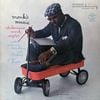
The genius of Thelonious Monk can be heard all across his discography, some more audible than others but here on his landmark effort "Monk's Music" released in 1957, his inventiveness and discernment can be especially sensed.
Within the world of jazz and piano music in general, Thelonious Monk was an iconoclast. He didn't play in an instantly enjoyable fashion but instead caused his listeners to "lean forward" and lend an attentive ear to what exactly he was doing. Rather ... read more
First and foremost, what makes up this album in content is sound experimentation and not music. The definition of music from the oxford dictionary is "vocal or instrumental sounds combined in such a way as to produce beauty of form, harmony and the expression of emotion." That is not to say it can't be appreciated, but I think the important word here is "experience" because what can be associated with that word is not always pleasant.
This is sound manipulated in the most ... read more
Recently, I had the great pleasure of writing an article on the ambient music of Gas, for MasterCrackfox and his excellent blog/podcast site, “Record Roundtable.Com”.
You can find the link at the bottom of the page in the comments.
Ambient music for a new century: Gas’s groundbreaking record “Pop.”
Have you ever noticed the ambiance of a certain occasion and have wanted to expound upon it by putting on relaxing music? Maybe you have put on classical music at ... read more

(overrated)
Unfortunately, I've never really taken to Sigur Ros's brand of post-rock, and even though I respect the band's determination and patience in constructing their songs, I honestly don't find their material to be all that compelling. Even though they are quite a unique band in appearance (as they sing in their native Icelandic and occasionally in their "made-up" language), the elements that they assemble in making their songs are not all that unique. Especially within the ... read more
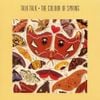
In my eyes, Talk Talk's third studio album The Colour of Spring is their most approachable album. It's not the expansive post-rock excursions found on Spirit of Eden or Laughing Stock. The Colour of Spring in comparison boasts something that those albums and even their previous albums didn't have. Its a collection comfortably situated in its simplicity and fluidity; that shows how Mark Hollis and company had a particular knack for constructing quality pop songs. Songs that are back to back ... read more
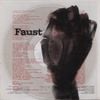
Infamous Krautrock band Faust can not be seen as merely another "rock" band, and while the group added their own unique flavors to their releases, they were a reflection of all that was taking place in the music scene at the time. From Stockhausen to Zappa, Faust's influences range far and wide during one of the most turbulent renaissances in music history. The band also sought not to imitate those influences but give their inherently unique spin to them by way of intricate sound ... read more

Thanks to you all for 800 followers!
Perhaps the single most influential composer of 20th Century Classical music was Arnold Schoenberg, who wrote elaborate pieces of music intended for the traditional mindset of classical music through the extensive use of atonality. He challenged the basics of the chromatic scale. He also published essays dedicated to his musical research that is still utilized to this day. Schoenberg early in his life immigrated from Germany to America to escape Nazi ... read more
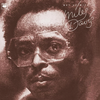
Miles Davis showed no reliance on any solid form of music, the minute he found himself becoming comfortable in a certain style or trend, he would drastically reinvent himself into a harbinger of something original and new. With this mindest, Miles proved himself again and again, decade after decade. Casting off his tailored suits for colorful goggles, and progressing from the cool to the hip. Once Miles made that drastic stylistic change at the beginning of the seventies, the change did not ... read more
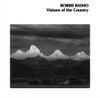
Robbie Basho was a man who had a connection with the natural world like no other, and his music reflects that of a person who has walked in the valleys, sat by the babbling brook, and hiked through the mountains in search of beauty and wonder. He uniquely utilized music to transcribe his deep affections for nature, weaving stories of immense beauty and emotional depth. Maybe it was a way to forget the troubles that plagued his youth as an orphan, or perhaps it was merely in the enjoyment of the ... read more
For someone who struggled with the rudiments of music theory early on, Ornette Coleman would stand out among the sea of saxophonists of his day, for his unnerving ingenuity and relentless energy. Most importantly, however, was his "ushering" in of Free Jazz, in which he coined the word on the album of the same name. Much in the same way that Art Blakey titled his 1958 album "Hard Bop."
The introduction of Free Jazz at the beginning wasn't as radical as its name suggests; ... read more
John Fahey and American-Primitivism
Don't let the term Primitivism deter you from listening to this distinct style of music because, in reality, the genre is anything but primitive. Primitive is used in this sense because the origins of this style originate from early roots, blues, and traditional American music passed down from generation to generation. However, this term came to be known around the 50s and 60s when many guitar virtuosos began to appear and drew from that plethora of early ... read more
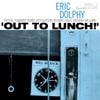
When it comes to Blue Note Records releases, you can always be guaranteed a standard of quality that is unlike any other record label's output. The label went on an extraordinary streak throughout the 1960s, signing dozens of talented jazz players from all across the states, and perfecting their physical presentation through their albums. The records that come to mind that defined Blue Note during the 1960s are exceptional records such as Eric Dolphy's "Out for Lunch," Herbie ... read more
Out of all the many electronic Krautrock electronic bands that emerged with extraordinary talent during the 60s and 70s, few were as polarizing and focused as ambient masterminds Cluster. Their view of electronic music as featured here on their 1971 album 71, was unusually intense and enveloping, as they utilized frequency and sound textures rather than digestible and serene sounds. This stylistic direction immediately sequestered the group in a darker, more brooding corner of the electronic ... read more
*700 Followers* A special thanks to every one of you!
Today, in commemoration of 700 followers, I would like to shed some light on one of my favorite albums of all time: Eric Dolphy's Out to Lunch. Out to Lunch is an album that is one of the most creative and groundbreaking pieces of music ever released. Out to Lunch is infamous for its varied sound, which clings to the traditions of jazz music by only a thin thread as it closely resembled what was to come with the free jazz movement. It was ... read more
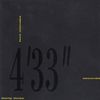
Entirely composed of well…silence, John Cage’s most controversial statement 4’33”, flipped the entire music community on its head. While the idea may seem utterly preposterous, lets take a closer look behind the piece and see how that idea was more than it seems to be.
John Cage is one of the most debated individuals in classical and electronic music, his music is severely abstract, and philosophical. I would even go as far to say, they are a tad bit ... read more
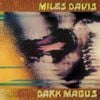
1970s Miles was vastly different than the decades that preceded them, influenced by everyone from Karlheinz Stockhausen to Jimi Hendrix, Miles Davis essentially shed his sleek and orderly suits from the 50s, and donned futuristic spectacles, clothing while also introducing a new sound. This exaggerated era for Miles quickly came to be called his "electric" era, a time of immense innovation, ingenuity, and the melding of various genres including jazz, rock, and improvisational music. ... read more
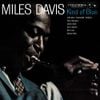
As i sit here writing this, it feels very picturesque. The sun is pouring in through the windows, the brilliant blues in the greens, a cardinal hopping about in search of food, and myself as i lift my eyes off the laptop, to take a moment and enjoy this moment, while Kind of Blue is on for the umpteenth time. It is a special moment when you can reflect on the atmosphere around you and take in creation, through all the sights, smells and sounds. So what, if i should be writing a school paper, a ... read more
I have a sweetspot for the more, if you will edgier side of Jazz music, while i do enjoy cool and modal jazz from time to time, my fascination and love for the darker experimental/Avante-Garde corner of the jazz realm rises to the top. For some reason i am often taken aback by the sonic harshness of hearing instruments being taken to their limits, or the highest register they can possibly reach, maybe it is my sense of adventurousness bleeding into my music tastes, that i enjoy hearing that ... read more
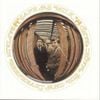
Captain Beefheart was one versatile and enigmatic artist, he played with sound and words like no other, twisting and bending them to his own fashion. What made his legacy so iconic and inspiring is due to his robustly confident spirit. Beefheart took music as a whole in the 60s, 70s, and 80s, and cut it up into a million pieces, then re-purposed it into this "frankensteinian" invention which is his discography. Captain Beefheart really was in a sense the "mad scientist" of ... read more
![John Coltrane - Ascension [Edition I]](https://cdn2.albumoftheyear.org/100x0/album/15752-ascension_120205.jpg)
It's the year 1966, change is happening in the Jazz scene, four years prior Saxophonist Ornette Coleman released his seminal album "Free Jazz", which was something of a fuse that would later lead the charge to the burgeoning free jazz movement that quickly took form toward the end of the 60s. Ornette was fearless and headstrong with "Free Jazz", embracing noticeable modal and harmonic changes that strayed from the familiar and warm sounds of the 50s, this decision to embody ... read more
Create an account to rate and review albums.
Recent Review Comments
On 𝐉𝐞𝐧𝐧𝐲 ✩'s review of Jimmy Giuffre - Trav'lin' Light
"i think you might profit a relisten my friend"
On Russian State Symphonic Cappella - Schnittke: Choir Concerto
"Thank you my friend."
On Task's review of John Coltrane - A Love Supreme
"i sense your perspective will change down the road"
On Evan Parker - Six of One
"@nah_ Thank you, this would be an ideal place to start!"
On Robbie Basho - Visions of the Country
"@nah_ Thanks. I am always finding time to return to his wonderful music."
On Fires Of London / Philip Jones Brass Ensemble / Gunter Hampel Free Jazz Ensemble / William Pearson / Giuseppe Agostini / Stomu Yamash'ta - Henze: Der langwierige Weg in die Wohnung der Natascha Ungeheuer
"Yes indeed, Henze is severely underrated these days."
On Radio Symphonie Orchester Wien / Klangforum Wien / Friedrich Cerha / Michael Gielen - Friedrich Cerha: Komponistenportrait
"You can find it on soulseek"
On SterlingCarter's review of La Chapelle Royale / Philippe Herreweghe - Dumont: Motets Pour La Chapelle Du Roy
"I’d have to part ways with you here Sterling."
On Квартет им. Бородина - Квартеты
"https://youtube.com/playlist?list=PLDToVn9CSIaA3pO4KQdttjloO3PXhLXad&si=mfnmLeS2JNTh1jb5"
On Radio Symphonie Orchester Wien / Klangforum Wien / Friedrich Cerha / Michael Gielen - Friedrich Cerha: Komponistenportrait
"That’s right, ligeti and penderecki both offered remarkable inventions of sonic brilliance. I suppose the reason I favor this cerha work over the aforementioned composers respected works is how he managed to bring the serialist ethos full circle and it was also a great place to retire at that. I don't see any progression of serialism beyond what cerha penned."
On TheGod's review of Daniel Barenboim - Olivier Messiaen: Quatuor pour la Fin du Temps
"What an absolutely delightful read Mathieux! I feel as if you have completely captured the essence of Messiaen’s magnum opus in your words!"
On Pierre Boulez - Complete Webern
"Thank you!"
On Marilyn Nonken - Tristan Murail: The Complete Piano Music
"@DoubleZ @daFigz I always appreciate the feedback, thank you! "
On Keith Rowe - The Room
"... the discovery of these thoughts. "
On Keith Rowe - The Room
"1. Thank You!
2. The Room cannot be consumed and digested by traditional means of listening to music. You won't find beats to stomp to your feet to or melodies to wistfully hum. After this thought, you may wonder what then is the purpose of such music? Is it not to be enjoyed by traditional means? The Room offers an experience that is largely introspective and intellectual. What I mean, is that it causes the listener to ponder or think about certain things. For one, one could wonder how these sounds are generated, how are they conjured up, what techniques is Rowe employing. The Room also causes listeners to ponder one's individuality specifically in the presence of a room. To quote my review "Rowe invokes significant meaning on top of seemingly meaningless sounds appealing to the very essence of the human condition". In a way, The Room is an auditory think-piece, a piece of music that forces emotions and thoughts out of its listener. It's a certain enjoyment that is found in the..."
On Keith Rowe - The Room
"@Inglume Thank You, I couldn’t agree more, the intimacy yet potency of The Room is a fine representation of all that Rowe had accomplished up until that point. Yet his vision continues to evolve as was seen with The Room Extended and beyond! "
On TheGod's review of John Fahey - Vol 3: Dance of Death & Other Plantation Favorites
"Excellent historic analysis math! It’s interesting getting to know more about this elusive genius!"
Advertisement