
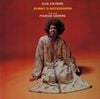
There is lots of conjecture about what new vistas of sound John Coltrane would have ventured into had he not died in ’67, but I think we have as close to a posthumous picture here, provided by his wife Alice.
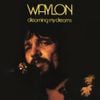
There’s a caramelized sheen to this record—it stands as the pinnacle of outlaw country. Beneath the rough, rowdy aesthetic typical of the genre lies an intimacy you rarely find. A truly special record.
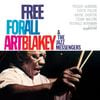
The title track alone serves to show that thrash jazz could have given free jazz a run for its money, driven by absolutely breakneck playing and an unhinged intensity. If free jazz turns you off, this is free jazz in a tailored suit—still dangerous, but cut to fit.
I reflect on this immense piece of work quite often since I first heard it in July of 2021, and recall the icon by the 15th-century Russian painter Andrei Rublev picturing the Holy Trinity; a most sublime expression of timeless beauty and grace. These two artifacts, I believe, are shards of eternity bleeding through into our mortal reality, and somehow they share timeless truth. The Rublev painting visually depicts the unseen, and the Schnittke sonically reveals a tapestry that has never before ... read more
In his monolithic statement, Evan Parker solidifies his sonic prowess. "Six of One" marks Parker's second foray into solo recording, showcasing his untethered exploration of the soprano saxophone. Here, a synthesis of new sound emerges, echoing Darwin's groundbreaking proposition in "On the Origin of Species." It represents a new doctrine on the genesis of sound from the soprano saxophone, where harmony and melody meld seamlessly into the fabric of formed sound.
Within ... read more
Assessing the quality of free improvisation records requires a distinct approach compared to evaluating conventional albums in established genres. The absence of a rigid structure in free improvisation is often regarded as a defining feature of the art form. That said, the primary criteria for evaluating such recordings that I've found are typically quality of inventiveness and group interaction. The Schlippenbach quartet is not lacking in any of those fields.
Though not an official FMP ... read more

Toward the end of this modernist parade, a brief citation of Mahler 5 appears out of nowhere as a hymn in 'Vermessungskunde', a peculiar occurrence indeed. It acts as a remembrance of the dying breaths of late romanticism, somehow embodying the realization that, in this context, it heralds the complete annihilation of all musical modes. Encore!
Antoni Wit, Barbara Kubiak, Izabella Kłosińska, Marta Boberska, Jadwiga Rappé, Ewa Marciniec, Timothy Bentch, Wojtek Drabowicz, Piotr Nowacki, Warszawski Chór Chłopięcy, Warsaw National Philharmonic Choir & Warsaw National Philharmonic Orchestra
Mahler Reference Recordings #8
Gustav Mahler's Eighth Symphony is by far his most epic and expansive work, making it exceedingly difficult for conductors to interpret. Due to its complex nature, there is little room for stylistic changes without affecting its core structure. As a conductor leading this titanic symphony, the best approach is to navigate through known and charted waters. I suggest that a literalist stance, involving a direct application of Mahler's instructions, is ... read more
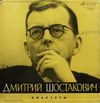
This mesmerizing, mercurial anthology of Shostakovich's quartets represents the pinnacle of 20th-century modern classical music. The cycle begins with a fresh take on the classical string quartet form and concludes poignantly with a self-eulogizing funeral march, embodying a remarkable journey of musical evolution. In the skilled hands of the Borodin String Quartet, these pieces find their most sublime expression.
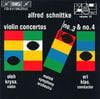
What an interesting contrast we have here on this 1991 premiere recording. On the one hand we have Schnittke's 3rd Violin Concerto which to my ears is not all that interesting. Yes, there are brief moments of intense psychosis that is a common trademark of his music, but the polystylism which usually marks Schnittke's appears to be on holiday. Then you have the glorious 4th Violin Concerto which to me is one of his most epic and indulgently polystylistic works that comes very close to rivaling ... read more
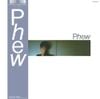
It's not quite so obvious when you give this record a listen that you have Holger Czukay and Jaki Liebezeit of Can fame lending a helping hand to Japanese minimal wave artist Phew. Perhaps it becomes a little more obvious when you realize what Can were up to as a band during the eighties releasing such uninspired releases like the atrocious Rite Time. It is within this context that one recognizes the echoes of a diluted Can sound, albeit noticeably altered.
Ultimately what you have here is ... read more
The sonata, a compositional medium that truly tests a composer's mettle, stands as a testament to its lauded sophistication and rich tradition, tracing back to the baroque period with the likes of Scarlatti. The sonata architecturally demands sound structure but its true grace is found in its emotional complexity. Perhaps the most exemplary sonata that adheres to rigid traditionalism but doesn't sacrifice anything for emotion is the "Appassionata" sonata by Beethoven. It's the ... read more
On these three piano sonatas the listener encounters the meticulous scientist Boulez; these works: his personal research. Turns out they are as a whole one of the many jewels adorning the Darmstadt schools musical corpus. Oddly enough, this sort of hyper-modernism and ultra-serialism found here all began with the mystic Messiaen whose gentle teachings and guidance lead to a certain group of composers to deconstruct serialism and throw it out altogether in favor of new complexity. As we engage ... read more
The Schnittke piece here, the auspicious 1985 Viola Concerto, is notably dry and polished to the point that I think some of the natural grit of the piece is pressure-washed away due totally to ECM's recording standards. This is of course no criticism of Kashkashian’s technical adeptness, it’s certainly there but albeit without the emotional seasoning that a luminary like Yuri Bashmet might handle the piece. The other work on this disc is Georgian composer Giya Kancheli's Vom Winde ... read more
Pairing Schnittke's Viola Concerto alongside the murky orchestral arrangement of In Memorium was a clever decision on classical label BIS's part, and ultimately makes for a truly gallant experience. The viola concerto is the true highlight out of the couple; the singular viola is pitted against the orchestra in a very one-sided arrangement. Oftentimes the orchestra is routed against the viola attempting to silence its voice with vulgar cascading sheets of sound. Viola responds with piercing ... read more
For last year's words belong to last year's language
And next year's words await another voice.
- T.S. Eliot, Four Quartets
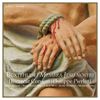
Ricercar Consort, Philippe Pierlot, Carlos Mena, Maria Keohane, Hanna Bayodi-Hirt, Jeffrey Thompson & Matthias Vieweg
Bach walked nearly 250 miles on foot to hear Buxtehude perform on the organ; I’d say his music is worth your time as well.
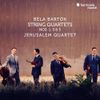
The Jerusalem Quartet smartly notices the difference between the odd and even quartets out of Bartók’s six beguiling string quartets. Not only are they odd-numbered but they are even odd in nature. In fact, 1, 3, and 5 prove to be the most technically difficult out of the whole bunch, and the Jerusalem Quartet handle them with a high degree of finesse and attention. It’s the variance between the romantic anchor in the first, the onerous technicality of the third, and the ... read more
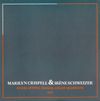
Now, this is something to behold. Featured here are two of the very best European free-improvising pianists both simultaneously stretching out the boundaries and limits of the piano. These eight lengthy re-imaginings of what the piano is capable of are even more pronounced by the fact that it sounds like four hands on one piano as opposed to two separate instruments, thus producing a breathtaking multi-dimensional soundscape of both violent collisions and instantaneous synapsis. There is a ... read more
Create an account to rate and review albums.
Recent Review Comments
On 𝐉𝐞𝐧𝐧𝐲 ✩'s review of Jimmy Giuffre - Trav'lin' Light
"i think you might profit a relisten my friend"
On Russian State Symphonic Cappella - Schnittke: Choir Concerto
"Thank you my friend."
On Task's review of John Coltrane - A Love Supreme
"i sense your perspective will change down the road"
On Evan Parker - Six of One
"@nah_ Thank you, this would be an ideal place to start!"
On Robbie Basho - Visions of the Country
"@nah_ Thanks. I am always finding time to return to his wonderful music."
On Fires Of London / Philip Jones Brass Ensemble / Gunter Hampel Free Jazz Ensemble / William Pearson / Giuseppe Agostini / Stomu Yamash'ta - Henze: Der langwierige Weg in die Wohnung der Natascha Ungeheuer
"Yes indeed, Henze is severely underrated these days."
On Radio Symphonie Orchester Wien / Klangforum Wien / Friedrich Cerha / Michael Gielen - Friedrich Cerha: Komponistenportrait
"You can find it on soulseek"
On SterlingCarter's review of La Chapelle Royale / Philippe Herreweghe - Dumont: Motets Pour La Chapelle Du Roy
"I’d have to part ways with you here Sterling."
On Квартет им. Бородина - Квартеты
"https://youtube.com/playlist?list=PLDToVn9CSIaA3pO4KQdttjloO3PXhLXad&si=mfnmLeS2JNTh1jb5"
On Radio Symphonie Orchester Wien / Klangforum Wien / Friedrich Cerha / Michael Gielen - Friedrich Cerha: Komponistenportrait
"That’s right, ligeti and penderecki both offered remarkable inventions of sonic brilliance. I suppose the reason I favor this cerha work over the aforementioned composers respected works is how he managed to bring the serialist ethos full circle and it was also a great place to retire at that. I don't see any progression of serialism beyond what cerha penned."
On TheGod's review of Daniel Barenboim - Olivier Messiaen: Quatuor pour la Fin du Temps
"What an absolutely delightful read Mathieux! I feel as if you have completely captured the essence of Messiaen’s magnum opus in your words!"
On Pierre Boulez - Complete Webern
"Thank you!"
On Marilyn Nonken - Tristan Murail: The Complete Piano Music
"@DoubleZ @daFigz I always appreciate the feedback, thank you! "
On Keith Rowe - The Room
"... the discovery of these thoughts. "
On Keith Rowe - The Room
"1. Thank You!
2. The Room cannot be consumed and digested by traditional means of listening to music. You won't find beats to stomp to your feet to or melodies to wistfully hum. After this thought, you may wonder what then is the purpose of such music? Is it not to be enjoyed by traditional means? The Room offers an experience that is largely introspective and intellectual. What I mean, is that it causes the listener to ponder or think about certain things. For one, one could wonder how these sounds are generated, how are they conjured up, what techniques is Rowe employing. The Room also causes listeners to ponder one's individuality specifically in the presence of a room. To quote my review "Rowe invokes significant meaning on top of seemingly meaningless sounds appealing to the very essence of the human condition". In a way, The Room is an auditory think-piece, a piece of music that forces emotions and thoughts out of its listener. It's a certain enjoyment that is found in the..."
On Keith Rowe - The Room
"@Inglume Thank You, I couldn’t agree more, the intimacy yet potency of The Room is a fine representation of all that Rowe had accomplished up until that point. Yet his vision continues to evolve as was seen with The Room Extended and beyond! "
On TheGod's review of John Fahey - Vol 3: Dance of Death & Other Plantation Favorites
"Excellent historic analysis math! It’s interesting getting to know more about this elusive genius!"
Advertisement